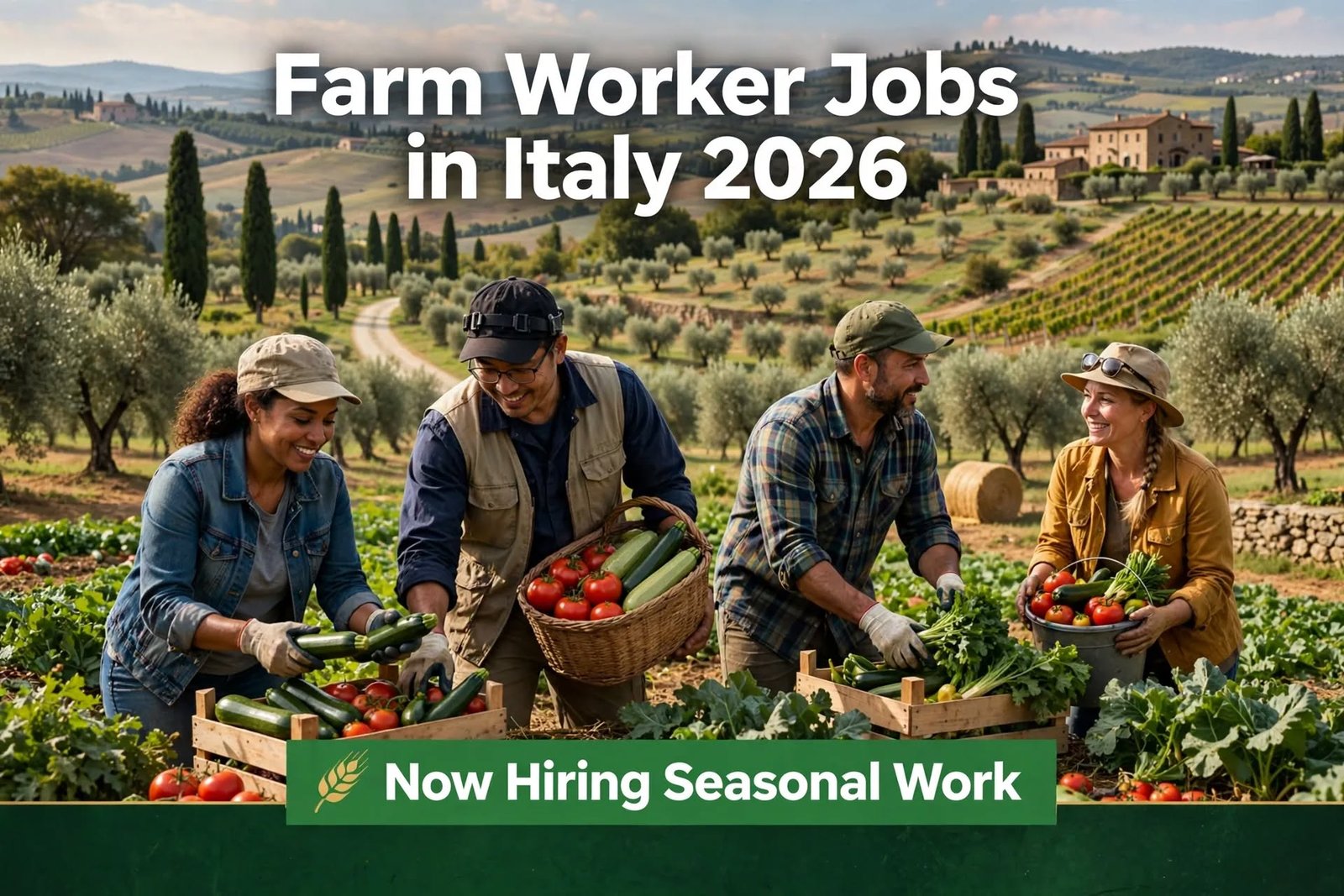
Italy is famous for its food: tomatoes from Puglia, citrus from Sicily, apples from the Alps, olive oil from Tuscany, and wine from Piedmont. All of that starts with people working in the fields, and Italian agriculture depends on a large seasonal workforce to bring it in.
That is why farm worker jobs in Italy attract thousands of applicants from around the world every year. The work is physical and the days can be long, but it is also one of the more accessible legal routes into the Italian labor market, especially for people without a university degree or Italian language skills.
This guide covers what the work involves, which regions hire, how the visa process works, what you can expect to earn, and how to protect yourself from the scams and exploitation that unfortunately exist around this sector. Read it from start to finish before you spend a single euro on any “job offer.”
What Are Farm Worker Jobs in Italy?
Farm worker jobs, known in Italian as operaio agricolo positions, cover a wide range of manual and semi-skilled tasks on farms, orchards, vineyards, greenhouses, and livestock operations. Most are seasonal, tied to planting, growing, and harvest cycles, though some farms offer year-round or long-term contracts.
Read Also: Driver Jobs in Italy
Common Types of Agricultural Work
- Fruit and vegetable picking: apples, pears, peaches, kiwis, cherries, tomatoes, strawberries, and more
- Grape harvesting (vendemmia): picking grapes by hand in vineyards, usually late summer to autumn
- Olive harvesting: typically October to December
- Greenhouse work: planting, tending, and harvesting vegetables and flowers
- Pruning and field maintenance: vine and tree pruning, weeding, and irrigation tasks
- Sorting and packing: grading produce at farm packing facilities
- Livestock and dairy support: feeding, cleaning, and milking assistance on cattle, sheep, and buffalo farms
- Machinery operation: tractor driving and equipment handling, which usually requires experience and pays better
Skilled vs. Unskilled Roles
Entry-level harvest work requires no formal qualifications. Roles like tractor driver, vineyard pruner, or greenhouse supervisor reward experience and can lead to better pay and longer contracts. If you have prior farm experience, say so clearly in your application.
Why Italy Needs Foreign Farm Workers
Italian agriculture faces a persistent labor shortage. Many young Italians are moving toward urban careers, the farming population is aging, and harvest periods are short and intense. A crop that is ripe has to be picked within days.
The government recognizes this. Each year, Italy sets aside quotas for non-EU workers through a framework called the Decreto Flussi (the “flows decree”), and agriculture receives a large share of those quotas. For job seekers, this is encouraging: demand is real and ongoing.
Top Regions for Agricultural Jobs in Italy
Italy’s climate varies widely, so harvest work is available in different regions at different times of year.
Southern Italy
- Puglia: famous for tomatoes, olives, and table grapes. The Foggia area is a major hub for tomato harvesting in late summer.
- Sicily: citrus fruits (oranges, lemons), olives, and grapes.
- Calabria and Campania: citrus, vegetables, and fruit orchards.
Central Italy
- Lazio (Latina area): kiwi, vegetables, and greenhouse crops. The Agro Pontino region has long employed large numbers of farm workers.
- Tuscany and Umbria: vineyards and olive groves, with harvest tourism adding to demand.
Northern Italy
- Trentino–South Tyrol: one of Europe’s largest apple-growing areas, with a harvest in September and October.
- Piedmont: wine regions such as Langhe and Monferrato, along with hazelnuts.
- Veneto and Emilia-Romagna: fruit orchards, vineyards, and vegetables.
Seasonal Calendar: When Is the Work Available?
Knowing the calendar helps you plan your application and travel.
- Spring (March–May): pruning, planting, early vegetables, strawberries, and asparagus
- Early summer (June–July): cherries, apricots, peaches, and greenhouse crops
- Late summer (August–September): tomatoes, grapes, apples, and melons
- Autumn (October–December): grape harvest continues, olives, kiwis, and citrus begin
- Winter (December–February): citrus harvest in the south, olive work, and winter pruning
Because several regions peak at different times, workers who are authorized for a longer period sometimes move between farms and crops.
Who Can Apply? Eligibility Basics
EU Citizens
If you hold citizenship of an EU country, you can live and work in Italy without a visa. You only need to register with the local authorities for longer stays and sign a proper employment contract.
Non-EU Citizens
For everyone else, the legal route is generally through a seasonal work permit under the Decreto Flussi. In broad terms, you will need:
- A valid passport
- A job offer from an Italian employer who has obtained authorization for you
- A work visa for seasonal employment, issued by the Italian embassy or consulate in your country
- Proof of suitable accommodation arranged by or through the employer
- Basic health and background documentation, as requested
Important: Rules, quotas, and application windows change from year to year. Always check the latest information on the official websites of the Italian Ministry of the Interior, the Ministry of Foreign Affairs, or your nearest Italian embassy before acting.
How the Seasonal Work Visa Process Works
Many applicants misunderstand this process, so it is worth being precise. In most cases you cannot apply for the work authorization yourself. The employer applies for you.
Step-by-Step Overview
- Find a genuine employer. The employer is an Italian farm or agricultural business that needs foreign workers.
- The employer submits a request for authorization (called the nulla osta) through the Italian immigration system during the designated application window, commonly known as a “click day.”
- Authorities review the request. Quotas, documents, and the employer’s eligibility are checked.
- You receive the green light. If approved, the authorization is sent to the Italian consulate in your country.
- You apply for the visa. You attend an appointment at the embassy or consulate with your documents.
- You travel to Italy and complete the remaining formalities, including signing the employment contract and applying for the residence permit (permesso di soggiorno) where required.
Seasonal permits are generally granted for a limited period, which can be up to nine months depending on the rules in force and the type of work. Some permits are multi-year arrangements that allow returning seasonal workers to come back more easily.
Why Timing Matters
Because quotas are limited and the application windows are short, starting early is essential. Employers often begin preparing months before the click day. If you are job hunting, reach out well ahead of time.
How Much Do Farm Workers Earn in Italy?
Agricultural wages in Italy are set by national and provincial collective agreements (contratti collettivi). These agreements establish minimum pay by skill level, overtime rules, and benefits. As a rough guide, many farm workers earn somewhere around €8 to €11 gross per hour, with variation by province, job level, and employer. Skilled roles, such as machinery operators, tend to earn more.
A few points to keep in mind:
- Legal contracts matter. A regular contract means social contributions are paid, which gives you access to healthcare and protections.
- Overtime and Sunday work should be paid at higher rates under the agreement.
- Deductions for tax and contributions will reduce your gross pay to a lower net amount.
- Accommodation is sometimes provided by the employer. Any deduction for housing should be clearly stated in writing and must be reasonable under the law.
- Piece-rate pay is sometimes used in harvesting, but it should never bring your pay below the legal minimum.
Treat any figures online, including these, as an estimate. Ask for the exact hourly rate, working hours, and contract terms in writing before you accept an offer.
A Typical Day on an Italian Farm
Harvest work typically starts early to avoid the midday heat, often at sunrise. A normal day might include:
- Early start, usually around 6:00 or 7:00 AM
- Picking or sorting for several hours
- A midday break, especially in hot regions
- Resuming work in the afternoon, then finishing in the early evening
- Six days a week during peak season, within legal working-hour limits
The work is physically demanding. You will bend, lift, and stand for long periods, often in heat. Good boots, sun protection, a hat, and plenty of water make a real difference.
Skills and Qualities That Help You Get Hired
You do not need a degree, but employers value reliability. Strengthen your application with:
- Previous farm or outdoor labor experience, even informal
- Physical fitness and stamina
- Willingness to work in teams and follow instructions
- Basic Italian or English. Even a few words help with safety instructions
- Flexibility about location and dates
- A clean, honest paperwork history with valid documents
Any machinery license or pruning experience should be listed prominently.
How to Find Genuine Farm Worker Jobs in Italy
Legitimate Places to Look
- Official government channels and embassy websites, which explain current quotas and procedures
- Italian agricultural associations such as Coldiretti, Confagricoltura, and CIA, which represent farms and often assist members with hiring foreign workers
- Licensed recruitment agencies (in Italy these are called agenzie per il lavoro and are authorized by the Ministry of Labour)
- Italian public employment services and established job portals
- Direct applications to farms, especially for regions you are targeting
How to Apply
- Prepare a short, clear CV focused on practical experience
- Write a simple cover message stating your availability, experience, and country of residence
- Include copies of your passport and any relevant certificates
- Follow up politely after a week or two
Avoiding Scams and Exploitation
This section matters as much as any other. Where there is demand for jobs abroad, there are people who prey on applicants.
Red Flags of a Scam
- Anyone asking you to pay a fee for a “guaranteed” job or visa
- Offers that arrive with no interview, no contract, and no named employer
- Pressure to decide immediately or send money by transfer or gift card
- A “visa” promised without the employer ever applying for your authorization
- Email addresses from free providers pretending to be a government office
- Promises of unrealistically high pay for unskilled work
Understanding Caporalato
Italy has a well-known problem called caporalato, in which illegal middlemen (caporali) recruit workers informally, pay far below legal wages, and impose poor living conditions. Italian law criminalizes this practice, but it still occurs in some areas.
To protect yourself:
- Insist on a written contract before traveling
- Never hand over your passport or documents to an employer or intermediary
- Keep records of the hours you work and the pay you receive
- Know your rights: you are entitled to a legal contract, fair pay, and safe conditions
- If something feels wrong, contact a trade union (such as FLAI-CGIL), a local labor office, or your embassy
A genuine employer will never charge you for the privilege of working for them.
Living in Italy as a Farm Worker
Accommodation
Housing is often arranged by the employer, either in farm dormitories or shared apartments. Ask about conditions, costs, and distance from the worksite in advance. Basic comforts such as running water, heating, and a safe sleeping place are your right.
Healthcare and Safety
Legally employed workers are covered by Italy’s contribution system. Employers must provide safety training and protective equipment where required. Learn the emergency number (112) and keep a copy of your contract and permit with you.
Language and Culture
Learning even basic Italian, such as greetings, numbers, and work vocabulary, will improve your daily life and your standing with employers. Italians generally appreciate the effort.
Saving and Sending Money
Open a bank account if you are staying for several months, and use regulated money-transfer services to send funds home. Keep payslips for your records.
Career Growth Beyond Seasonal Work
For many people, seasonal farm work is a first step rather than a destination. Workers who prove reliable can:
- Return in later seasons with the same employer, often more easily
- Move into skilled roles such as machinery operation, vineyard management, or greenhouse supervision
- Transition to year-round roles in livestock, dairy, or processing
- Learn Italian and explore other sectors such as packing, logistics, or hospitality
Check the current rules on converting a seasonal permit into a longer-term work permit, since this depends on the law in force at the time.
Pros and Cons of Farm Work in Italy
Advantages
- Low entry barrier, with no degree required
- A legal pathway to work in Europe
- Opportunity to experience Italian rural life
- Employer-provided housing in many cases
- Possibility of returning in future seasons
Challenges
- Physically demanding work
- Seasonal and sometimes unpredictable schedules
- Limited permit duration
- Risk of scams and exploitation if you are not careful
- Language barriers at first
Conclusion
Farm worker jobs in Italy can be a genuine opportunity: real demand, a legal pathway, and a chance to build experience in one of Europe’s most celebrated agricultural countries. The key is to approach it with realistic expectations and careful preparation.
Remember the essentials. Work only through a genuine employer and the official visa process. Get everything in writing. Never pay for a job. Check current rules and quotas from official sources before making decisions. If you do that, you give yourself the best chance of a safe, fair, and rewarding season.
Frequently Asked Questions (FAQ)
1. Can I get a farm worker job in Italy without speaking Italian?
Yes, many entry-level harvest roles do not require fluent Italian. However, basic words help with instructions and safety, and they improve your chances of being rehired.
2. Do I need experience to work on an Italian farm?
Not for most picking and packing roles. Experience in pruning, machinery, or livestock helps you qualify for higher-paying positions.
3. Can I apply for the seasonal work permit myself?
In most cases, no. The Italian employer submits the authorization request on your behalf under the Decreto Flussi. You then apply for the visa at the consulate once it is approved.
4. How long can I stay in Italy as a seasonal farm worker?
Seasonal permits are time-limited, and the maximum duration depends on the current rules, but it can reach up to nine months. Confirm the exact period in the latest official guidance.
5. How much do farm workers earn in Italy?
Pay follows collective agreements and varies by region and role. Many workers earn roughly €8–€11 gross per hour. Always confirm the figure in your written contract.
6. Is accommodation provided?
Often yes, but not always. Ask the employer in advance, and make sure any housing cost is stated clearly in writing.
7. Should I pay an agent to get me a farm job in Italy?
No. Genuine employers do not charge workers for jobs or visas. Requests for upfront payment are a major warning sign of fraud.
8. When is the best time to apply?
Start early. Application windows under the Decreto Flussi are short and tied to quotas, so contact employers and agencies several months before the season you want.
9. What should I do if I am exploited or underpaid?
Keep records, avoid surrendering your documents, and seek help from a trade union, local labor authorities, or your embassy.
Disclaimer: Visa rules, quotas, wages, and procedures change regularly. This article is for general information only, so verify details with official Italian government sources before applying.
One thought on “Farm Worker Jobs in Italy: A Complete Guide to Seasonal Agricultural Work”