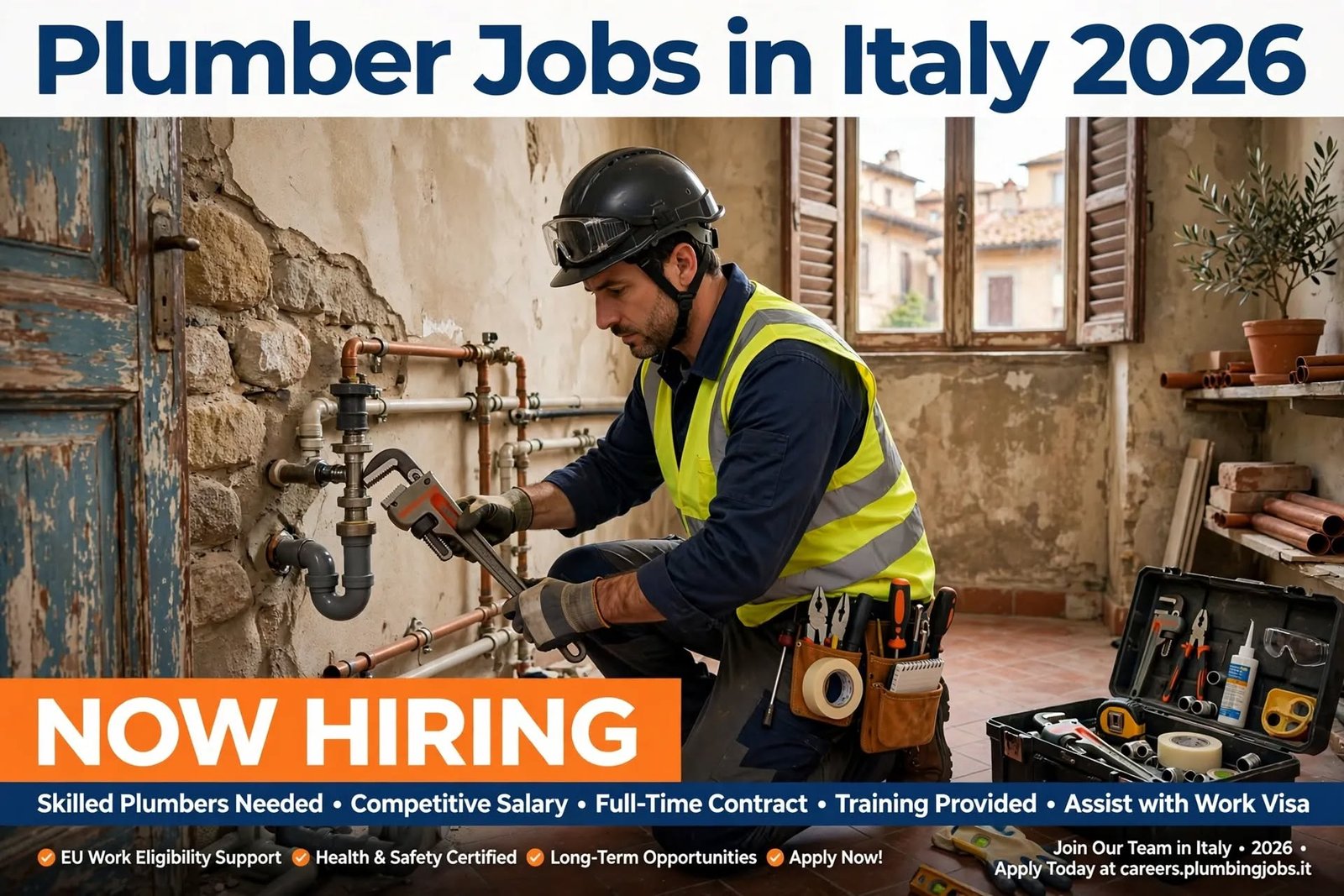
Italy is famous for its food, fashion, and history. Behind all of that sits an enormous stock of old buildings, apartment blocks, hotels, and farmhouses that need constant care. Every one of them has pipes, boilers, radiators, and drains, and somebody has to install and repair them.
That somebody is the plumber, known in Italian as an idraulico. Italian employers across many sectors report that skilled trade workers are hard to find. For a qualified plumber, that shortage means real opportunity.
This guide covers what plumbers do in Italy, how much they can earn, which visa routes exist, which regions hire the most, and how to approach your job search. Whether you are an experienced plumber abroad or just starting out, you’ll find a practical roadmap here.
Why Plumber Jobs in Italy Are in Demand
Several long-term trends keep demand steady.
An Aging Housing Stock
Much of Italy’s housing is decades old, and a lot of it is much older. Old pipes corrode, old boilers fail, and old bathrooms get renovated. This produces a constant flow of repair and replacement work that does not disappear in a downturn.
Energy Efficiency and Renovation Programs
Italy has pushed energy-saving upgrades for years through tax incentives and government schemes. Replacing old gas boilers with heat pumps, installing solar thermal systems, and upgrading heating networks all require plumbing skills. Incentive rules change often, so always check the current situation, but the overall direction toward efficient heating is clear.
A Shortage of Young Tradespeople
Many young Italians choose university paths over manual trades. Meanwhile, a large share of experienced tradespeople are nearing retirement. Employers in construction and installation regularly say they cannot fill technical roles, which makes foreign skilled workers more welcome than in many other professions.
Tourism and Hospitality
Hotels, resorts, agriturismi, and restaurants need working water systems around the clock. Seasonal peaks bring extra maintenance and installation work, particularly in coastal and tourist regions.
What Does a Plumber Do in Italy?
The job goes beyond fixing leaks. Typical duties include:
- Installing water supply lines, drainage, sanitary fixtures, and bathroom systems
- Repairing leaks, blocked drains, faulty taps, and damaged pipes
- Fitting and servicing boilers, radiators, and underfloor heating
- Installing heat pumps and solar thermal equipment
- Reading technical drawings and planning pipe layouts
- Working on building sites alongside electricians, bricklayers, and project managers
- Advising customers on materials, costs, and efficiency
Common Specializations
- Residential plumber: Homes, apartments, and small repair jobs
- Commercial and industrial plumber: Offices, factories, and large buildings
- Heating technician (termoidraulico): Combines plumbing with heating and cooling systems. This is one of the most employable profiles in Italy.
- Maintenance plumber: Works in hotels, hospitals, or residential complexes
- Self-employed idraulico: Runs a small business serving local customers
If you can offer both plumbing and heating skills, you will stand out. In Italy the term termoidraulico is very common in job adverts.
Plumber Salary in Italy
Pay depends on experience, region, employer, and contract type. The figures below are rough ranges, not guarantees, and you should check current job listings and the applicable collective agreement before making decisions.
Typical Monthly Earnings
- Entry-level or apprentice: often in the range of roughly €1,200 to €1,500 net per month
- Experienced employed plumber: commonly around €1,500 to €2,000 net per month
- Highly skilled specialist (heating, heat pumps, supervision): can exceed that, especially in northern regions
- Self-employed plumber with a steady client base: income varies widely and can be higher, but so are costs and risks
What Affects Your Pay
- Region: Wages and demand are generally higher in the north, such as Lombardy, Veneto, and Emilia-Romagna, though living costs are higher too.
- Contract and collective agreement (CCNL): Most employed plumbers are covered by a national collective agreement, most often in construction or metalworking and installation, which sets minimum pay levels, overtime, and leave.
- Skills and certificates: Specialist qualifications, such as those for heat pumps, raise your value.
- Language skills: Italian speakers can work with customers directly and earn more responsibility.
Benefits to Expect
Employed workers in Italy normally receive social contributions toward pension and healthcare, paid leave, and a TFR (severance-type payment accrued over time). Many also get a thirteenth month salary (tredicesima), and sometimes a fourteenth, depending on the contract.
Who Can Work as a Plumber in Italy?
EU and EEA Citizens
If you hold citizenship of an EU country, you can live and work in Italy without a work visa. You will need to complete local registration formalities and may need to get your qualifications recognized.
Non-EU Citizens
Most non-EU workers need a work visa tied to a job offer. The main route for new arrivals is the Decreto Flussi, an annual quota system that sets the number of foreign workers admitted for different sectors, including construction and skilled trades.
Visa and Work Permit Routes Explained
Rules change, so treat this section as a general guide and confirm details with official Italian sources.
1. The Decreto Flussi Route
Under this system, an Italian employer applies on your behalf during designated application windows. If approved, you receive clearance to apply for a work visa (visto per lavoro subordinato) at an Italian consulate in your country. After arriving, you apply for a residence permit (permesso di soggiorno).
Key points:
- The employer starts the process, not you.
- Quotas are limited and applications are often competitive.
- Timelines can be long, so plan ahead.
2. Seasonal Work Permits
Some sectors, mainly agriculture and tourism, have seasonal permits. These are less common for plumbing but may apply in hospitality maintenance roles.
3. Self-Employment Visas
It is possible to enter as a self-employed worker, but the requirements are strict. You typically need proof of income, suitable accommodation, and meeting local business and registration rules. This route is harder for newcomers.
4. Studying or Training First
Some people enter Italy through vocational training or study programs and later move into work. This takes longer but can build language skills and local connections.
Beware of Scams
Work-visa fraud is a real problem. Be cautious if someone:
- Asks for large payments to “guarantee” a visa
- Promises a job without a proper contract or employer details
- Claims to be able to skip the official quota process
A legitimate Italian employer will not sell you a visa. Verify every offer through official channels.
Qualifications and Certifications
Experience and Training
Italian employers value hands-on experience. A vocational diploma in plumbing, heating, or mechanical installation is helpful. Documented work history, references, and a portfolio of completed jobs strengthen your application.
Recognition of Foreign Qualifications
Plumbing is a regulated activity in Italy when it comes to installation companies. Under Italian rules for installers of plant systems, a business must prove the technical and professional qualifications of its responsible person before operating. If you plan to work as an employee, your employer usually handles the compliance side. If you plan to start your own business, you will need to meet these requirements and register properly.
Ask the relevant Italian authority or a professional association what recognition your foreign certificate needs, and have your documents translated and certified where required.
Extra Certifications That Help
- Gas safety qualifications for boiler and gas appliance work
- Refrigerant and heat pump certification, which is increasingly in demand
- Workplace safety training, which Italian employers take seriously
- Basic health and safety certificates for building sites
Language: How Important Is Italian?
You can sometimes find entry-level work with limited Italian, especially on teams with other foreign workers. But speaking Italian is one of the biggest factors in long-term success.
You will need Italian to:
- Understand safety instructions and technical terms
- Talk to customers and site managers
- Read contracts and documents
- Progress to supervisor or self-employed roles
Useful Plumbing Vocabulary
- Idraulico: plumber
- Tubo: pipe
- Caldaia: boiler
- Perdita: leak
- Scarico: drain
- Rubinetto: tap
- Termosifone: radiator
- Pompa di calore: heat pump
Start learning before you arrive. Even basic Italian makes a visible difference to employers.
Best Regions for Plumber Jobs in Italy
Northern Italy
Regions such as Lombardy, Veneto, Piedmont, and Emilia-Romagna have strong industrial and construction sectors. Wages tend to be higher, and demand for heating and installation specialists is strong. Cities like Milan, Turin, Bologna, and Verona are good places to start your search.
Central Italy
Lazio, Tuscany, and Umbria combine renovation work in historic towns with steady tourism. Rome has constant demand for maintenance and residential work.
Southern Italy and the Islands
Opportunities exist in Campania, Puglia, Sicily, and Sardinia, especially in tourism and renovation. Pay is generally lower, but living costs are too. Seasonal demand around the coast can be strong.
How to Find Plumber Jobs in Italy
Step-by-Step Job Search Plan
- Prepare your documents. Update your CV in Italian and English, gather certificates, and collect references.
- Learn the basics of Italian. Aim for a workable level before applying.
- Search reputable job boards. Use well-known Italian job portals, European job networks, and company career pages.
- Target installation companies. Search for “impianti termoidraulici,” “imprese edili,” and “manutenzione impianti.”
- Contact employers directly. Many small Italian firms hire through word of mouth and direct applications.
- Use official employment channels. Public employment services and recognized agencies can connect you with legitimate vacancies.
- Attend interviews seriously. Be ready to describe your experience and show practical knowledge.
- Confirm the contract. Check pay, hours, accommodation arrangements, and the applicable collective agreement before accepting.
Where Employers Look for Plumbers
- Building and renovation companies
- Heating and energy-efficiency firms
- Hotel groups and resort maintenance teams
- Facility management companies
- Property management firms
- Small family-run installation businesses
Tips for a Strong Application
- Keep your CV to one or two clear pages.
- List specific projects, such as “installed heating systems in 40 apartments.”
- Mention certifications and safety training.
- Show willingness to learn Italian.
- Be honest about your experience level.
Working Conditions and Daily Life
Working Hours
A standard full-time week in Italy is typically around 40 hours, with overtime rules set by the contract. Emergency call-outs may add extra hours.
Physical Demands
Plumbing is physical work. You will kneel, lift, and work in tight spaces, sometimes outdoors in heat or cold. Good boots, gloves, and protective gear are essential, and employers must follow Italy’s strict workplace safety laws.
Cost of Living
Rent is the main expense. Large cities such as Milan and Rome are expensive, while smaller towns and the south are cheaper. Many newcomers share apartments at first to save money.
Healthcare and Social Protection
Legal workers contribute to the national system and gain access to public healthcare and social benefits once properly registered.
Career Growth and Future Prospects
Plumbing in Italy can lead to several paths:
- Senior plumber or team leader: Supervise crews and train apprentices.
- Site supervisor or project coordinator: Move into planning and management.
- Heating and renewable energy specialist: Focus on heat pumps and solar systems, a growing field.
- Business owner: Start your own installation company after meeting the legal requirements.
- Technical trainer: Teach vocational courses.
As Europe moves toward cleaner energy, plumbers who understand modern heating technology are likely to remain in demand.
Common Challenges (and How to Handle Them)
- Language barrier: Take classes early and practice daily.
- Bureaucracy: Italian paperwork can be slow. Keep copies of everything and be patient.
- Visa quotas: Plan well ahead and apply during official windows.
- Qualification recognition: Start the process early and ask professionals for guidance.
- Scams: Never pay anyone for a guaranteed job or visa.
Conclusion
Plumber jobs in Italy offer a stable career for people who are skilled, patient, and willing to adapt. The demand comes from real, lasting factors: old buildings, energy upgrades, tourism, and a shortage of trained tradespeople. Pay is solid rather than spectacular, but benefits, job security, and room for growth make the profession attractive.
Success comes down to preparation. Learn Italian, document your skills, choose the right region, and use only official visa channels. If you do that, a plumbing career in Italy is a realistic goal.
Frequently Asked Questions (FAQ)
1. Can foreigners work as plumbers in Italy?
Yes. EU citizens can work freely. Non-EU citizens generally need a work visa linked to an employer, most often through the Decreto Flussi quota system.
2. How much does a plumber earn in Italy?
Employed plumbers often earn roughly €1,200 to €2,000 net per month, depending on experience, region, and contract. Specialists and self-employed plumbers can earn more.
3. Do I need to speak Italian?
You may find entry-level work with limited Italian, but fluency greatly improves your pay, safety, and career prospects.
4. Is plumbing a regulated profession in Italy?
Installation work is regulated, particularly for businesses. Employees are usually covered by their employer’s compliance, while anyone starting a business must meet technical and professional requirements.
5. Which region is best for plumber jobs?
Northern regions such as Lombardy, Veneto, and Emilia-Romagna usually offer higher wages and more industrial demand. Tourist areas in the center and south offer seasonal opportunities.
6. Can I start my own plumbing business in Italy?
Yes, but you must meet registration, qualification, and tax requirements. Most people gain local experience as employees first.
7. How long does the work visa process take?
It varies. Quota applications, employer clearance, and consular steps can take several months, so start early.
8. How can I avoid job scams?
Never pay for a promised visa, always verify the employer, and insist on a written contract through official channels.
Disclaimer: Salary figures, visa rules, and certification requirements change over time. Always confirm current details with official Italian government sources before making decisions.
One thought on “Plumber Jobs in Italy: Salary, Visa Options and How to Get Hired”