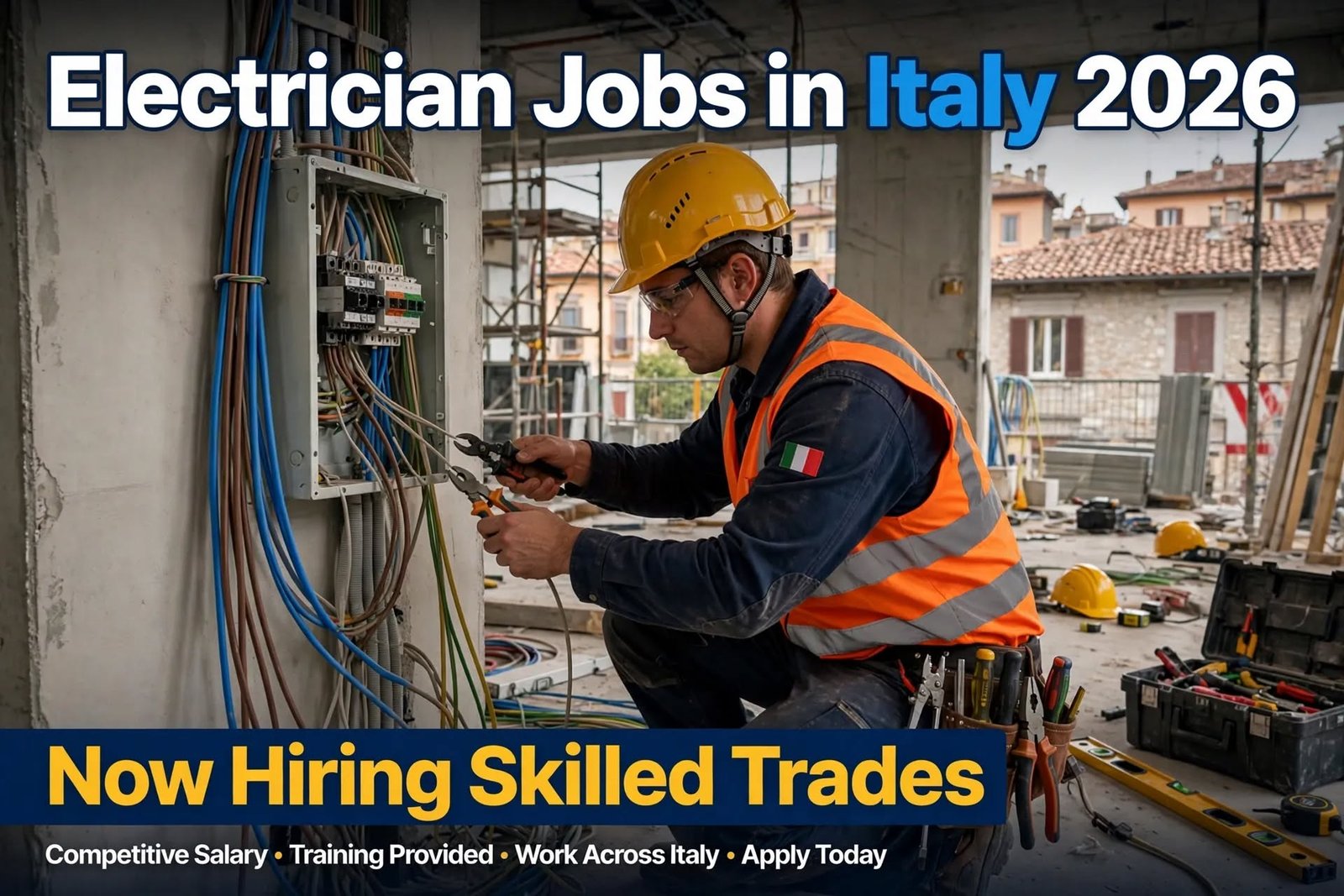
Italy is known for its food, fashion, and history. Behind the postcards, though, it is a country with a serious need for skilled tradespeople. Its housing stock is ageing, its industrial north is one of Europe’s manufacturing hearts, and its push toward solar and electric mobility is creating new demand every year. In all of this, electrician jobs in Italy are among the most stable and practical options for skilled workers from abroad.
If you are an experienced electrician thinking about a move to Europe, this guide is for you. It covers what the work looks like, what you can expect to earn, which visa routes exist, what paperwork you need, and how to avoid the scams that target hopeful job seekers. Read it as a practical roadmap rather than a promise: immigration rules and quotas change, so always confirm the latest details with official Italian sources before you act.
Why Italy Needs Electricians
Italy’s labor market has a well-documented shortage of skilled trades. Many experienced electricians are approaching retirement, and fewer young Italians are entering vocational careers. Several forces keep demand high:
- An older building stock. Millions of homes and commercial properties need rewiring, safety upgrades, and modernization.
- Energy transition projects. Solar panels, heat pumps, battery storage, and EV charging stations all need qualified installers.
- Industrial strength. Regions such as Lombardy, Veneto, Emilia-Romagna, and Piedmont host factories that depend on industrial electricians and maintenance technicians.
- Construction and renovation. Building incentives in recent years have kept renovation work busy.
- Tourism infrastructure. Hotels, resorts, and restaurants constantly need maintenance and upgrades.
Read Also: Farm Worker Jobs in Italy
For you as a job seeker, this means employers are often open to hiring qualified people from other countries, provided the legal process is followed correctly.
Types of Electrician Jobs in Italy
“Electrician” covers a wide range of roles. Knowing where you fit will make your search far more focused.
Residential Electrician
You install and repair wiring, sockets, lighting, distribution boards, and safety devices in homes and apartments. This work is steady and a good entry point, especially with small and mid-sized installation firms.
Commercial Electrician
You work in offices, shops, hotels, and public buildings, handling larger circuits, emergency lighting, fire alarm systems, and structured cabling.
Industrial Electrician
This role is common in factories and production plants. You maintain motors, control panels, PLC-based systems, and automation equipment. It tends to pay better and rewards additional technical training.
Solar and Renewable Energy Installer
Photovoltaic installation is one of the fastest-growing segments. Installers mount panels, connect inverters, and set up storage systems. If you have any solar experience, highlight it.
Maintenance Electrician
You keep buildings, hospitals, or facilities running by diagnosing faults and doing preventive maintenance.
Electrical Apprentice or Helper
If you have limited experience, helper roles can be a starting point, though they are harder to secure from abroad because employers generally prefer proven skills.
How Much Do Electricians Earn in Italy?
Salaries vary by region, experience, sector, and employer. As a general guide:
- Entry-level or helper roles often pay modestly, with net monthly income that can be fairly tight in expensive cities.
- Experienced residential and commercial electricians typically earn a comfortable, middle-range salary.
- Industrial and specialist electricians (PLC, automation, high-voltage) usually sit at the higher end.
Pay in Italy is largely shaped by national collective labor agreements (CCNL), which set minimum wages, working hours, overtime rules, holiday entitlements, and extras like the thirteenth-month salary (tredicesima), and in many cases a fourteenth. Your contract should reference the CCNL that applies to your sector, such as construction or metalworking.
Cost of living matters. Northern cities like Milan are better paid but significantly more expensive. Smaller towns in Veneto, Emilia-Romagna, or the south may offer lower wages but far cheaper rent. Compare net pay against housing costs before you choose a destination.
Because salary figures change and differ by contract, treat any number you see online, including in job ads, as a starting point and verify it against the actual offer and the relevant CCNL.
Qualifications and Skills Employers Look For
Italy takes electrical safety seriously. Installation work is regulated, and companies that carry out electrical installations must meet specific technical-professional requirements. For you, this means documented proof of skill carries real weight.
Core Requirements
- Proven hands-on experience in wiring, installation, testing, and troubleshooting
- Formal training, such as a vocational diploma, trade certificate, or apprenticeship record
- Knowledge of electrical safety standards and the ability to work to them
- Reading technical drawings and wiring diagrams
- Basic Italian, at least enough to follow safety instructions and work with a team
Skills That Make You Stand Out
- PLC programming and industrial automation
- Solar PV and battery storage installation
- EV charger installation
- Building automation and smart-home systems
- Fire alarm and security system installation
- Work-at-height and workplace-safety certificates
Recognition of Foreign Qualifications
Having a foreign certificate does not automatically mean it is accepted in Italy. Depending on your situation, you may need your diploma or trade certificate translated, legalized, and compared with Italian standards. Some employers also care mainly about demonstrated experience, but regulated tasks may require specific recognized qualifications. Ask any prospective employer exactly what they need from you, and check with the relevant Italian authority or an authorized assistance service.
Legal Ways to Work as an Electrician in Italy
This is the part that confuses most job seekers, so take it slowly.
For EU/EEA Citizens
If you hold citizenship from an EU or EEA country, you can live and work in Italy without a visa. You will need to register your residence and obtain a tax code (codice fiscale), but there is no sponsorship hurdle.
For Non-EU Citizens: The Decreto Flussi
Most non-EU workers enter Italy for employment through the Decreto Flussi, the government’s quota system. Each cycle, Italy sets the number of non-EU workers who may enter for different categories, such as seasonal work and non-seasonal subordinate work. Here is the usual outline:
- An Italian employer applies. The employer submits a request for a work authorization during the designated application window, often called a “click day.”
- Authorization (Nulla Osta). If approved, the immigration office issues a Nulla Osta al lavoro.
- Visa application. You apply for the work visa at the Italian consulate in your country.
- Entry and permit. After arriving, you sign your residence contract and apply for your residence permit.
Key points to remember:
- You cannot simply apply by yourself. The process starts with an employer.
- Quotas are limited, and competition for slots can be intense.
- Rules and quotas change. Always check the latest decree and procedures on official Italian government and consulate websites.
Other Routes
- EU Blue Card is generally aimed at highly qualified professionals and doesn’t suit most trade roles.
- Study-then-work paths, such as vocational training in Italy, can open options for some applicants.
- Intra-company transfers apply only if you already work for a multinational with Italian operations.
Where to Find Electrician Jobs in Italy
Applying to the right places makes a major difference.
Online Job Platforms
- Italian job boards and international sites list installation and maintenance roles. Search both in English and in Italian using terms like “elettricista”, “impiantista elettrico”, and “manutentore elettrico”.
- LinkedIn is useful for industrial and renewable roles with larger companies.
- EURES, the European job mobility portal, lists vacancies across member countries and can be a reliable starting point.
Direct Applications
Many small and mid-sized installation firms never post publicly. Look up companies in the region you like, find their contact details, and send a short, polite email with your CV attached. Writing a few lines in simple Italian shows effort and often earns a reply.
Staffing and Recruitment Agencies
Italian employment agencies (agenzie per il lavoro) place technical workers. Legitimate agencies are licensed, and they never charge candidates for finding a job.
Networking
Trade fairs, professional groups, and online communities of electricians working abroad can offer honest advice and leads. Ask people what the real day-to-day experience is like.
Best Regions for Electrician Work
Lombardy
Home to Milan, it has Italy’s biggest concentration of industry, construction, and services. Pay is higher, and so are living costs.
Veneto and Emilia-Romagna
Strong manufacturing economies with many small and medium-sized companies, good for industrial and maintenance roles.
Piedmont
Automotive and engineering sectors create demand for industrial electricians.
Trentino-Alto Adige
A well-off region where German is widely spoken alongside Italian, with steady construction and renewable energy work.
Central and Southern Italy
Lower wages, but significant opportunities in solar projects, tourism-related maintenance, and renovation, with a more affordable cost of living.
How to Write a CV That Works in Italy
Your CV is your first impression. Make it easy for a busy employer to say yes.
- Keep it to one or two pages. Clear and concise wins.
- Lead with your trade skills. List the kinds of installations and systems you’ve handled.
- Include certificates and training with dates and issuing bodies.
- Mention your languages, including your Italian level, however basic.
- Add a professional photo and short personal details if you’re comfortable, as is common in Italy.
- Include a data-protection line, usually: authorization to process personal data under GDPR.
- Offer a brief cover note explaining why you want to work in Italy and what you can bring.
If you can, have your CV translated into Italian by someone who knows trade vocabulary.
Step-by-Step Plan to Get an Electrician Job in Italy
- Audit your skills. Write down your experience, certificates, and specialties.
- Start learning Italian. Even A1–A2 level helps a great deal. Focus on technical vocabulary.
- Prepare your documents. Gather diplomas, work references, and a clean, translated CV.
- Research qualification recognition with the relevant Italian bodies.
- Target employers. Build a list of firms and agencies in two or three regions.
- Apply consistently. Send tailored applications and follow up politely.
- Understand the visa route. Learn how the Decreto Flussi works for your category and nationality.
- Verify every offer. Confirm the employer is real, the contract is clear, and the CCNL is stated.
- Plan your arrival. Arrange housing, a tax code, health registration, and a bank account.
Avoiding Job Scams
Because the demand for work abroad is high, scammers exploit it. Protect yourself:
- Never pay for a “guaranteed” job offer or visa. Legitimate employers do not sell jobs.
- Be suspicious of offers that arrive out of nowhere with no interview or skills check.
- Verify the company. Check its registration, website, and contact details independently.
- Read the contract carefully. It should state pay, hours, duties, and the applicable CCNL.
- Use only official channels for visas and permits.
- Avoid sending sensitive documents to unverified contacts.
If something feels rushed or too good to be true, step back and verify.
Life as an Electrician in Italy
Working Conditions
Standard full-time work is typically around 40 hours a week under most contracts, with overtime rules defined by the CCNL. Safety regulation is strict, and employers are expected to provide protective equipment and training.
Work Culture
Italian workplaces tend to be relationship-based. Being punctual, respectful, and willing to learn Italian goes a long way. Teams are often small and close.
Benefits
Legal employment generally comes with paid leave, public healthcare access, social contributions, and severance pay (TFR), though specifics depend on your contract.
Career Growth
With experience, you can move into supervision, project management, or specialist roles. Some electricians eventually open their own business after meeting the legal and licensing requirements.
Challenges to Expect
Being honest about difficulties helps you prepare:
- Language barrier in the early months
- Bureaucracy, including permits, registrations, and paperwork
- Quota competition under the Decreto Flussi
- Housing costs in major cities
- Qualification recognition delays
None of these is a dealbreaker. Preparation and patience make them manageable.
Frequently Asked Questions (FAQ)
Can foreigners get electrician jobs in Italy?
Yes. EU citizens can work freely, and non-EU citizens can work with a valid work authorization and visa, usually through an employer and the quota system.
Do I need to speak Italian?
Fluency isn’t always required at the start, but basic Italian is very helpful for safety and teamwork, and many employers prefer it.
How much does an electrician earn in Italy?
It depends on your experience, sector, region, and contract. Industrial and specialist roles usually pay more than basic installation work. Check the applicable CCNL and the specific offer.
Is visa sponsorship available for electricians?
Employers can request authorization for foreign workers through the official quota system. It isn’t guaranteed, and slots are limited each year.
Can I apply for a job from my home country?
Yes. You can search and apply from abroad, but a formal work authorization process must be completed before you can legally work.
Are my foreign qualifications valid in Italy?
Not automatically. You may need translation, legalization, and recognition, especially for regulated installation tasks. Confirm requirements with the relevant authority.
How can I tell if a job offer is real?
Check the employer’s registration, insist on a written contract, and never pay anyone for a job or visa.
Which skills are most in demand?
Solar PV installation, industrial automation and PLCs, EV charger installation, and building automation are strong areas.
Conclusion
Electrician jobs in Italy offer real opportunity for skilled, patient, and well-prepared workers. Demand is driven by an ageing building stock, a strong industrial base, and the shift toward renewable energy. The path isn’t instant. You’ll need to document your skills, learn some Italian, understand the quota-based visa process, and stay alert to scams. But for electricians willing to do the groundwork, Italy offers stable work, structured labor protections, and a chance to build a career in one of Europe’s most fascinating countries.
Start small: update your CV, begin learning Italian, and research employers in one region. Then verify every rule with official Italian sources, since policies and quotas change. With steady effort, your move from the fuse box at home to a job site in Italy can become a reality.
Disclaimer: Immigration rules, quotas, salaries, and qualification requirements change regularly. This article is general information, not legal advice. Always confirm current details with official Italian authorities and consulates.