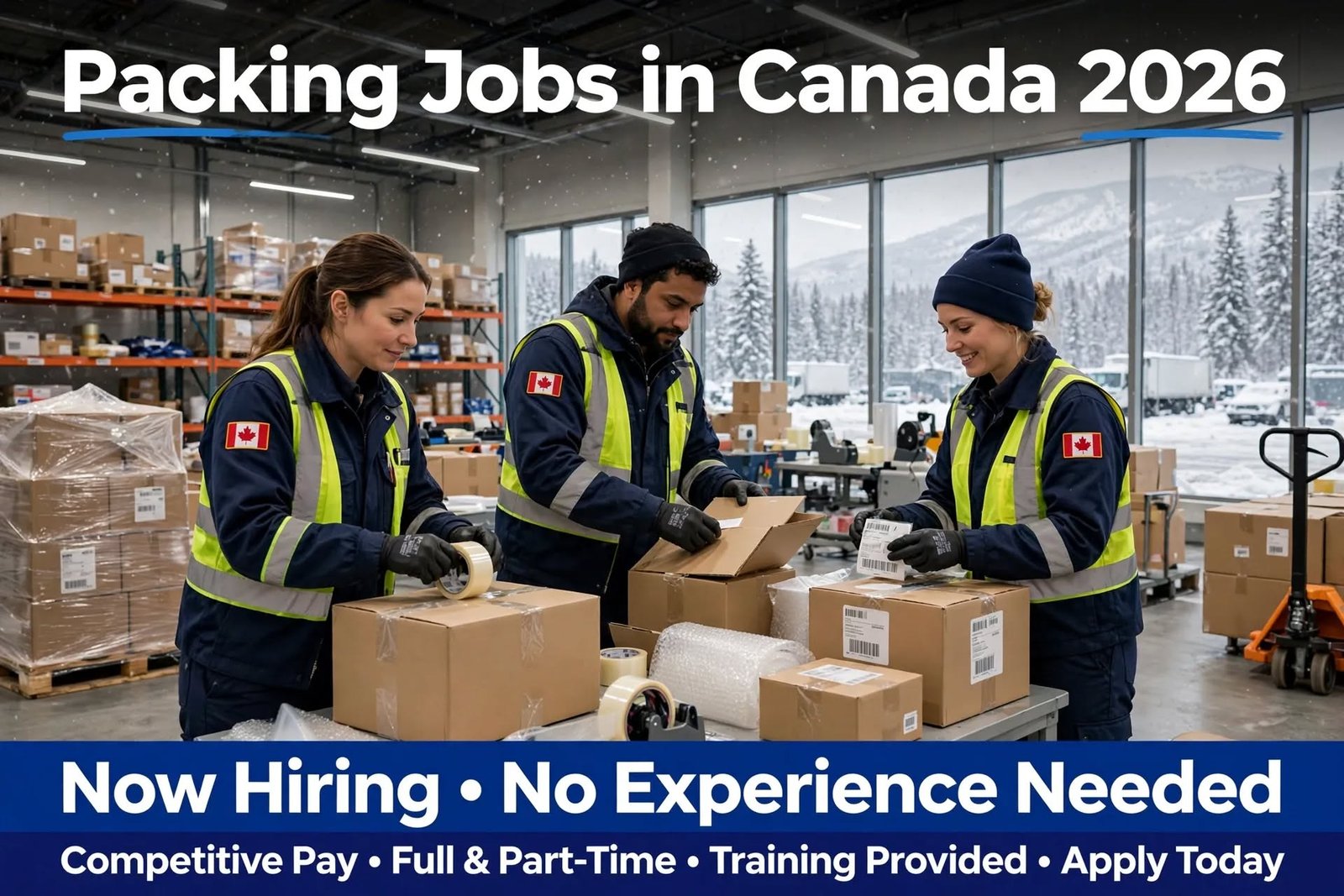
Canada’s food processing and manufacturing industry is booming in 2026, creating
thousands of vacancies for packers across the country. With over 280+ active jobs
listed on Job Bank Canada, packing jobs have become one of the most accessible
entry-level careers for both locals and foreigners.
If you are looking for a job that requires no degree, offers on-the-job training,
and pays well, this guide is for you.
What Does a Packer Do in Canada?
Packers in Canada work under the NOC 95106 category – Labourers in food and
beverage processing. Their main duties include:
-
Sorting and Inspection:
Checking products for quality, size, and damage and removing defective items. -
Packing and Labeling:
Placing products into boxes, cartons, and containers, applying labels and
barcodes, and preparing pallets for shipment. -
Operating Production Lines:
Working on conveyor belts to meet daily production targets. -
Maintaining Hygiene:
Following Canadian food safety regulations, cleaning workstations, and wearing
protective gear.
Workplaces include warehouses, cold storage facilities, fruit orchards, meat
plants, and factories.
Types of Packing Jobs Available
-
Food & Frozen Food Packers:
The most common. You will pack fruits, vegetables, meat, and bakery items. -
Fruit Packing Jobs:
Seasonal jobs focused on apples, cherries, blueberries, and strawberries. -
Warehouse & Manufacturing Packers:
General labour jobs packing e-commerce products, boxes, and manufactured goods.
Salary for Packing Jobs in Canada in 2026
According to Job Bank Canada, the median wage for a packer in Canada is
$20.00 per hour. Most employers pay:
- Entry-Level: $16–$18 per hour
- Experienced Packers: $18–$22 per hour
Overtime is paid after 40–44 hours per week depending on the province.
This translates to a monthly earning of approximately
CAD $2,500 to $3,800 before taxes. Some employers also provide
accommodation, meals, and transportation.
Top Provinces Hiring Packers in 2026
-
British Columbia:
Apples, cherries, and blueberries – high demand from May to October. -
Ontario:
The largest hub with 140+ jobs in Hamilton and 250+ jobs in Ottawa alone for
packers. -
Quebec & Montreal Region:
30+ jobs advertised near Montreal for packaging line workers. -
Alberta & Nova Scotia:
Meat plants and apple packing plants.
Requirements
The best part about packing jobs is the low barrier to entry.
- No formal education required
- Short-term work experience is enough – on-the-job training is provided
- Basic English communication
- Physical stamina to stand for long hours and lift 10–20 kg
- Age 18+ and legally eligible to work in Canada
How to Apply
-
Search on official portals such as Job Bank Canada, Indeed Canada, and company
websites. - Prepare your resume in Canadian format.
-
If you are outside Canada, look for job postings that specifically mention
LMIA support or eligibility for foreign workers. - Apply directly and never pay a recruitment agent who guarantees a job.
Packing jobs can be a way to start a career in Canada and gain Canadian work
experience. However, obtaining permanent residency depends on the immigration
program’s eligibility requirements at the time of application.
Packing Jobs in Canada for Foreigners 2026 with LMIA & Work Permit Sponsorship
Meta Description:
Complete 2026 guide to packing jobs in Canada for foreigners. Get information
about LMIA, work permits, salaries of $16–$22/hr, eligibility, benefits, and
the application process.
Suggested Slug:
/canada-packing-jobs-for-foreigners-visa-sponsorship
Are you looking for packing jobs in Canada from Pakistan, India, Philippines,
or Africa with visa sponsorship? In 2026, Canada is hiring foreign workers
through programs that can allow eligible employers to hire workers from
abroad for certain agricultural and food-processing positions.
This guide explains how foreign workers may legally obtain a packing job in
Canada through an LMIA-based work permit.
Why Canada Needs Foreign Packers?
Canada’s agricultural sector relies on seasonal and temporary workers for
certain harvesting and packaging activities. Employers may seek authorization
to hire foreign workers when they meet the applicable government requirements
and cannot fill positions with Canadian citizens or permanent residents.
Visa Pathway: How Foreigners Get Hired
Some packing and agricultural jobs for foreign workers may be available
through programs such as:
- Temporary Foreign Worker Program (TFWP)
- Seasonal Agricultural Worker Program (SAWP)
Depending on the position and program, an employer may need a Labour Market
Impact Assessment (LMIA). A typical LMIA-based process can involve:
-
The Canadian employer applies for an LMIA where one is required, demonstrating
that the applicable requirements have been met. - The employer receives an LMIA decision.
-
If approved, the employer provides the foreign worker with the required job
offer and supporting documents. -
The worker applies to Immigration, Refugees and Citizenship Canada (IRCC)
for the appropriate work permit. -
After approval and completion of applicable travel requirements, the worker
can travel to Canada and begin employment according to the work permit.
Work permit duration varies depending on the job, employment contract,
immigration program, and the decision made by Canadian authorities.
Eligibility Criteria for Foreign Applicants
- Valid passport
- Police clearance or criminal record documentation where required
- Medical examination where required
- Basic English can be helpful, although language requirements vary by job and program
- Ability to perform the physical duties of the position
- No specific education may be required for some entry-level packing positions
Salary and Benefits
Packing job wages vary by employer, province, occupation, and employment
conditions. The article’s stated range is:
CAD $16–$22 per hour.
Working hours also vary by employer and applicable employment standards.
Some seasonal positions may involve extended or variable schedules.
Depending on the employer and job offer, benefits may include:
- LMIA support where applicable
- Written employment contract
- Workplace safety coverage where applicable
- Overtime pay where required by law
- Shared accommodation in some positions
- Meals or transportation in some positions
How to Find LMIA-Supported Packing Jobs Safely
Step 1: Search Job Bank Canada
Visit Job Bank Canada and search for packing, food processing, agricultural,
and related positions. Check the posting carefully for information about
whether the employer is recruiting foreign workers and whether an LMIA is
involved.
Step 2: Search Other Job Platforms
You can also search Indeed Canada and individual company career pages using
terms such as:
- “Food Packing LMIA”
- “Packer Foreign Worker”
- “Food Processing Worker LMIA”
- “Agricultural Worker Canada”
Step 3: Verify the Employer
Always verify the employer and carefully review the job offer. Do not pay
large upfront recruitment fees to someone who promises a guaranteed Canadian
job or visa.
Step 4: Prepare Your Documents
Commonly requested documents may include:
- Updated CV or resume
- Passport copy
- Employment or experience letters, if available
- Other documents requested by the employer or immigration authorities
Can Packing Jobs Lead to Permanent Residency?
Canadian work experience can be relevant to some immigration pathways, but
working as a packer does not automatically lead to permanent residency.
Eligibility depends on the specific occupation, immigration program,
province or territory, work experience, language ability, and other
requirements in effect when you apply.
Applicants should check the current requirements for applicable Provincial
Nominee Programs (PNPs), federal programs, and other immigration pathways
before relying on a packing job as a route to permanent residency.
Conclusion
Packing jobs can provide entry-level employment opportunities in Canada’s
food processing, agricultural, warehouse, and manufacturing sectors. For
foreign workers, the legal hiring and work-permit process depends on the
specific employer, occupation, and immigration program.
Always apply through legitimate job portals or directly through employers,
verify job offers carefully, and use official Canadian government information
when checking work-permit and immigration requirements.