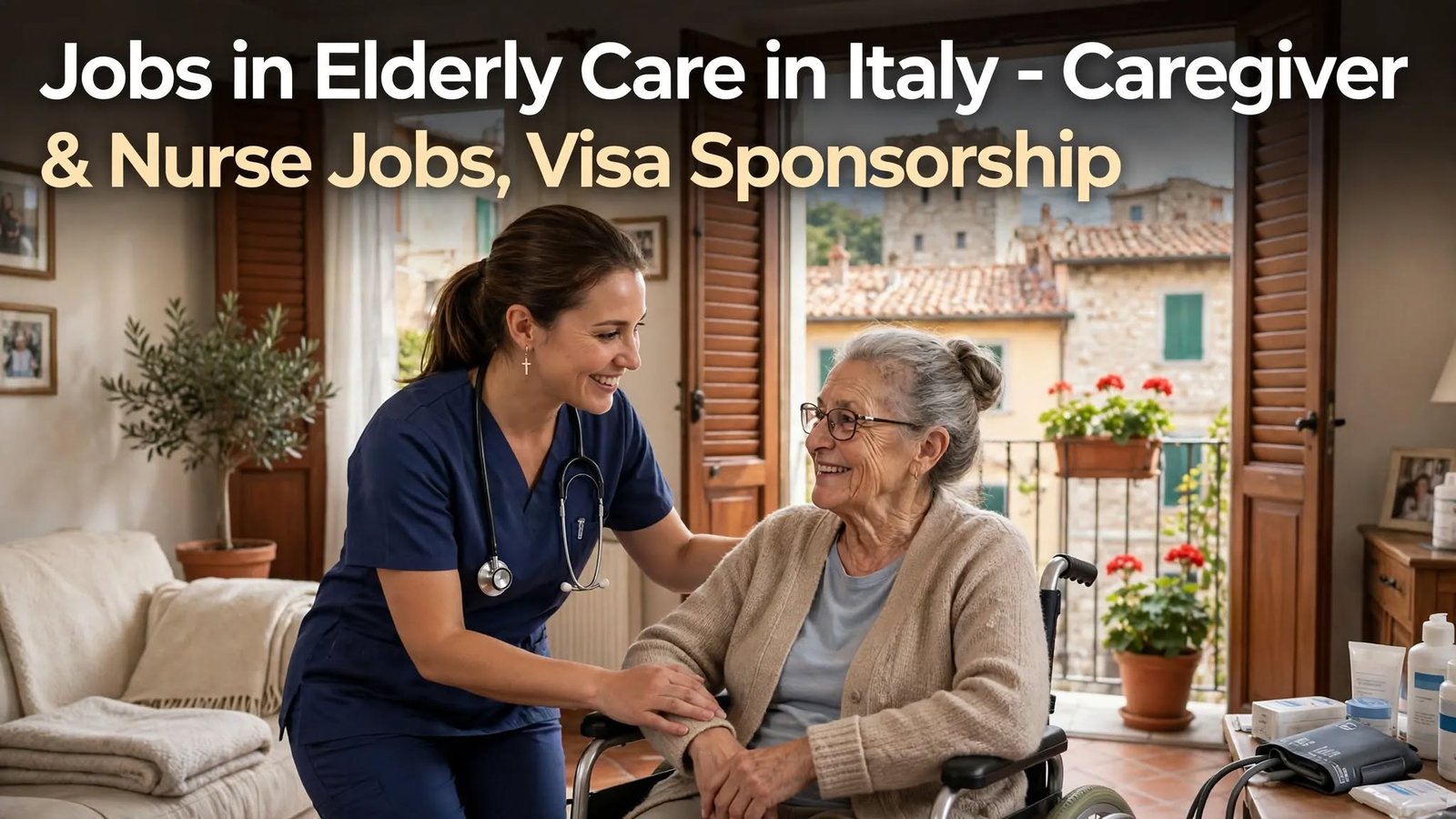
Italy is one of the oldest countries in the world. Roughly one in four residents is over 65, and the share keeps rising every year. Most Italian families still prefer to look after their parents and grandparents at home, but work schedules, smaller households and children living in other cities make that harder than ever. The result is a steady, long-term demand for people who can provide compassionate, reliable care.
That demand is why jobs in elderly care in Italy are among the most accessible opportunities for foreign workers. You do not need a university degree to begin. You do need patience, responsibility, basic Italian and the right paperwork.
This guide explains the types of roles available, what they pay, how the visa process generally works, which skills employers want and how to avoid scams. By the end, you will know whether this career path fits you and what to do first.
Read Also: Construction Helper Job Opportunities in Italy: A Complete Guide for Foreign Workers
Why Elderly Care Is a Growing Sector in Italy
An Ageing Population
Italy has one of the lowest birth rates in Europe and one of the longest life expectancies. Fewer young workers and more older adults means more families need help. This trend is not temporary. Demographers expect it to continue for decades.
A Home-Care Culture
Unlike some countries where nursing homes are the default, many Italian families choose private home care. A caregiver living in or visiting the home is seen as more dignified and comfortable for the older person. This created a large informal and formal market for caregivers, widely known by the Italian word badante.
Shortage of Local Workers
Many Italians do not choose caregiving as a career, especially live-in work. Employers, care cooperatives and agencies therefore rely on foreign workers to fill the gap. This is why caregiving appears regularly in Italy’s immigration planning.
Types of Elderly Care Jobs in Italy
Elderly care is not a single job. It covers several roles with different duties, qualifications and pay.
1. Live-In Caregiver (Badante Convivente)
A live-in caregiver lives in the older person’s home and provides daily support. This is the most common entry point for foreigners.
Typical duties:
- Helping with washing, dressing and personal hygiene
- Preparing meals and feeding if needed
- Reminding the person to take medicines (not administering medical treatment)
- Light housekeeping and laundry
- Providing company and conversation
- Accompanying the person to appointments or walks
Pros: Accommodation and meals are usually included, so you can save more of your salary.
Cons: Long hours, limited privacy and emotional demands.
2. Hourly or Live-Out Caregiver (Badante a Ore)
These caregivers work set hours, such as mornings or evenings, and return to their own accommodation. This suits people who prefer more personal freedom or who already live in Italy.
3. Night Caregiver
Some families need someone overnight for supervision, especially when the older person has dementia or sleeps badly. Night shifts often pay a bit more.
4. Nursing Home and RSA Assistant
RSAs (Residenze Sanitarie Assistenziali) are residential care facilities. Assistants here work in teams under nurses and supervisors, with fixed shifts, written contracts and clearer career steps.
5. ASA and OSS Professionals
These are qualified roles:
- ASA (Ausiliario Socio-Assistenziale): a basic care qualification.
- OSS (Operatore Socio-Sanitario): a higher, regulated qualification that allows more health-related tasks, working in hospitals, RSAs and public or private care services.
OSS professionals generally earn more and have stronger job security, but the training requires time and Italian fluency.
6. Dementia and Alzheimer’s Specialist Caregiver
Experienced caregivers with dementia training are in demand. This specialization can raise both your pay and your employability.
7. Care Coordinator or Supervisor
With experience, language skills and training, some caregivers move into coordinating teams or managing facilities.
How Much Do Elderly Care Jobs Pay in Italy?
Salaries vary by region, contract type, hours and experience. The figures below are approximate ranges to help you plan. Always confirm current numbers before accepting an offer.
| Role | Typical Monthly Pay (approx.) |
|---|---|
| Live-in caregiver | €900 – €1,300 plus room and board |
| Hourly caregiver | €7 – €10+ per hour (higher in large cities) |
| RSA assistant | €1,100 – €1,500 |
| OSS professional | €1,400 – €1,900+ |
| Dementia specialist | Often higher than standard rates |
Important notes:
- Domestic care work is covered by a national collective contract (CCNL for domestic work) that sets minimum wages, rest days, holiday pay and contributions. Employers must follow it.
- Live-in workers receive accommodation and food, which is a major financial advantage.
- Northern regions and large cities such as Milan, Bologna and Rome often pay more, but living costs are higher too.
- Overtime, night work and holiday work should be paid according to the contract.
Treat any promise of a “huge salary” with suspicion. Genuine offers are modest but stable.
Who Can Work in Elderly Care in Italy?
EU Citizens
EU nationals can live and work in Italy freely. They can apply directly for jobs without a visa.
Non-EU Citizens
Citizens of countries outside the EU generally need legal authorization to work. The most common route is through Italy’s Decreto Flussi, the government decree that sets annual quotas for foreign workers. Domestic and care work (assistenza familiare e sociosanitaria) has regularly been included, sometimes with dedicated quotas.
People Already in Italy
If you hold a valid residence permit that allows employment, you can apply for caregiver roles directly with families, cooperatives or agencies.
The Visa Process for Caregivers: Step by Step
The details change from year to year, so always check official sources. The general flow looks like this:
Step 1: Find a Genuine Employer
Under the standard quota route, an employer in Italy typically applies on your behalf. You cannot usually start the process alone from abroad.
Step 2: Employer Applies Through the Official Portal
The employer submits a request for authorization during the quota application window, usually through the immigration portal managed by Italian authorities.
Step 3: Nulla Osta (Work Authorization)
If approved, the local immigration office (Sportello Unico per l’Immigrazione) issues a nulla osta, which is permission for you to be hired.
Step 4: Apply for the Visa
With the nulla osta, you apply for a work visa at the Italian embassy or consulate in your country.
Step 5: Arrive and Sign the Contract
After arrival, you sign the employment contract (contratto di soggiorno) and apply for your permesso di soggiorno (residence permit) at the local post office or immigration office.
Documents You May Need
- Valid passport
- Proof of identity and background documents
- Evidence of caregiving experience or training
- Language certificates, if available
- Health-related documents as requested
Tip: Quota windows are competitive and open on specific dates. Preparing documents early gives you an advantage.
Skills and Qualities Employers Look For
Practical Skills
- Safe handling and mobility support (lifting, transferring, preventing falls)
- Basic hygiene and personal care
- Cooking simple, healthy meals, ideally including Italian dishes
- Basic first-aid knowledge
- Medication reminders and routine tracking
Language Skills
Italian matters enormously. Many older people speak little or no English, and communication affects safety. Aim for at least A2–B1 level before applying. Some employers and visa processes may ask for proof.
Personal Qualities
- Patience: Older people may repeat themselves, resist help or feel frustrated.
- Empathy: Emotional support is as important as physical care.
- Reliability: Families depend on you completely.
- Respect for privacy and dignity: Essential in intimate care.
- Emotional resilience: The work can be heavy, especially with illness or loss.
Helpful Certifications
- First aid and CPR courses
- Caregiving or nursing assistant certificates from your home country
- Dementia care training
- ASA or OSS qualification obtained in Italy
How to Find Elderly Care Jobs in Italy
1. Official Quota Applications
This is the safest route for non-EU workers. Follow government announcements for Decreto Flussi dates and requirements.
2. Licensed Recruitment Agencies
Italian placement agencies and cooperatives match caregivers with families and facilities. Check that they are registered, and remember that legitimate agencies should not demand large upfront fees from workers.
3. Care Cooperatives and RSA Networks
Social cooperatives and care homes regularly hire. Look at their websites or contact HR departments directly.
4. Online Job Portals
Italian job boards, LinkedIn and local classifieds list caregiver roles. Search with terms such as assistenza anziani, badante, OSS and assistente familiare.
5. Community and Word of Mouth
Many caregivers find jobs through recommendations from other caregivers, parishes and community groups. Personal references carry real weight in Italy.
6. Hospitals and Public Health Services
Qualified OSS professionals can apply to public health authorities (ASL) and hospitals, often through competitive selection procedures.
Living and Working Conditions: What to Expect
Working Hours
Live-in caregivers often work long daily hours, but the contract should include daily rest periods, a weekly day off and holidays. Clarify hours before signing.
Accommodation
You usually get your own room in the family home. Ask in advance about the room, bathroom access and house rules.
Emotional Challenges
You may be responsible for someone who is ill, lonely or declining. Building boundaries, taking your days off and keeping contact with friends help prevent burnout.
Cultural Adjustment
Italian family life, meals and routines may differ from what you are used to. Learning basic Italian etiquette and showing interest in local customs builds trust quickly.
Career Growth
Many caregivers start as live-in workers, learn the language and then move into RSA roles or train as OSS. Each step increases income and stability.
Pros and Cons of Working in Elderly Care in Italy
Advantages
- Consistent demand and strong job availability
- Low entry barrier compared with many professions
- Accommodation and food often included
- Legal protections under national contracts
- Opportunities to improve qualifications and advance
Challenges
- Physically and emotionally demanding work
- Language barrier at the start
- Long hours in live-in roles
- Slow and sometimes complex visa processes
- Risk of fraudulent recruiters
How to Avoid Job Scams
Fake job offers targeting people who want to work abroad are common. Protect yourself:
- Never pay for a “guaranteed” job or visa to an unverified person.
- Be cautious of offers that arrive through social media messages with no company details.
- Verify the employer’s identity, address and registration.
- Do not hand over your passport originals to an agent who is not officially authorized.
- Insist on a written contract that matches Italian labor rules.
- Cross-check visa information on official Italian government and embassy websites.
If something sounds too good to be true, it usually is.
Practical Tips to Improve Your Chances
- Start learning Italian early. Apps, online classes and language exchange partners all help.
- Document your experience. Letters of reference from previous employers or families strengthen your profile.
- Take a caregiving or first-aid course. Certificates show professionalism.
- Prepare a clear CV. Include care experience, languages, certifications and availability.
- Follow official quota announcements. Missing an application window can mean waiting another year.
- Be realistic about expectations. Treat the first job as a stepping stone to better roles.
- Network with other caregivers. Their advice on employers, regions and rights is invaluable.
Conclusion
Jobs in elderly care in Italy offer something many professions cannot: steady demand, a clear legal framework and a meaningful way to make a difference in people’s lives. The work is demanding, and success depends on language skills, patience and careful paperwork, but the rewards are real. Many workers build stable careers, move into qualified roles such as OSS and eventually bring family members to join them.
If you are considering this path, begin with honest preparation. Improve your Italian, gather your documents, understand the visa route and trust only verified employers and official channels. With the right approach, caregiving in Italy can become a secure and respected career.
Frequently Asked Questions (FAQ)
1. Are elderly care jobs in demand in Italy?
Yes. Italy’s ageing population and preference for home care create consistent demand for caregivers, nursing home assistants and qualified OSS professionals.
2. Do I need to speak Italian to work as a caregiver?
Basic Italian is strongly recommended and often essential, since safety and daily communication depend on it. Aim for A2–B1 before applying.
3. Can foreigners get a caregiver visa for Italy?
Non-EU citizens can generally work through the Decreto Flussi quota system, where a legitimate employer in Italy applies for authorization on their behalf. Rules and quotas change, so check official sources each year.
4. How much does a caregiver earn in Italy?
Live-in caregivers typically earn roughly €900–€1,300 per month plus room and board, while qualified OSS professionals can earn more. Figures vary by region and contract.
5. Do I need a qualification to start?
Not always. Many live-in and home-care roles accept experience over formal qualifications. ASA and OSS roles do require recognized training.
6. What is the difference between a badante and an OSS?
A badante is a general home caregiver who assists with daily living. An OSS is a regulated, trained social-health operator who can perform additional health-related tasks in facilities and public services.
7. Can I bring my family to Italy?
Family reunification is possible under certain conditions, such as stable income and suitable housing. Requirements depend on your permit type, so confirm with the immigration office.
8. How can I avoid recruitment scams?
Never pay unverified agents, confirm employers independently, insist on written contracts and use official government channels for visa applications.
Disclaimer: Salary figures, quotas and visa rules change frequently. Always verify current information with official Italian authorities or the Italian embassy in your country before making decisions.
One thought on “Jobs in Elderly Care in Italy: A Complete Guide for Job Seekers”