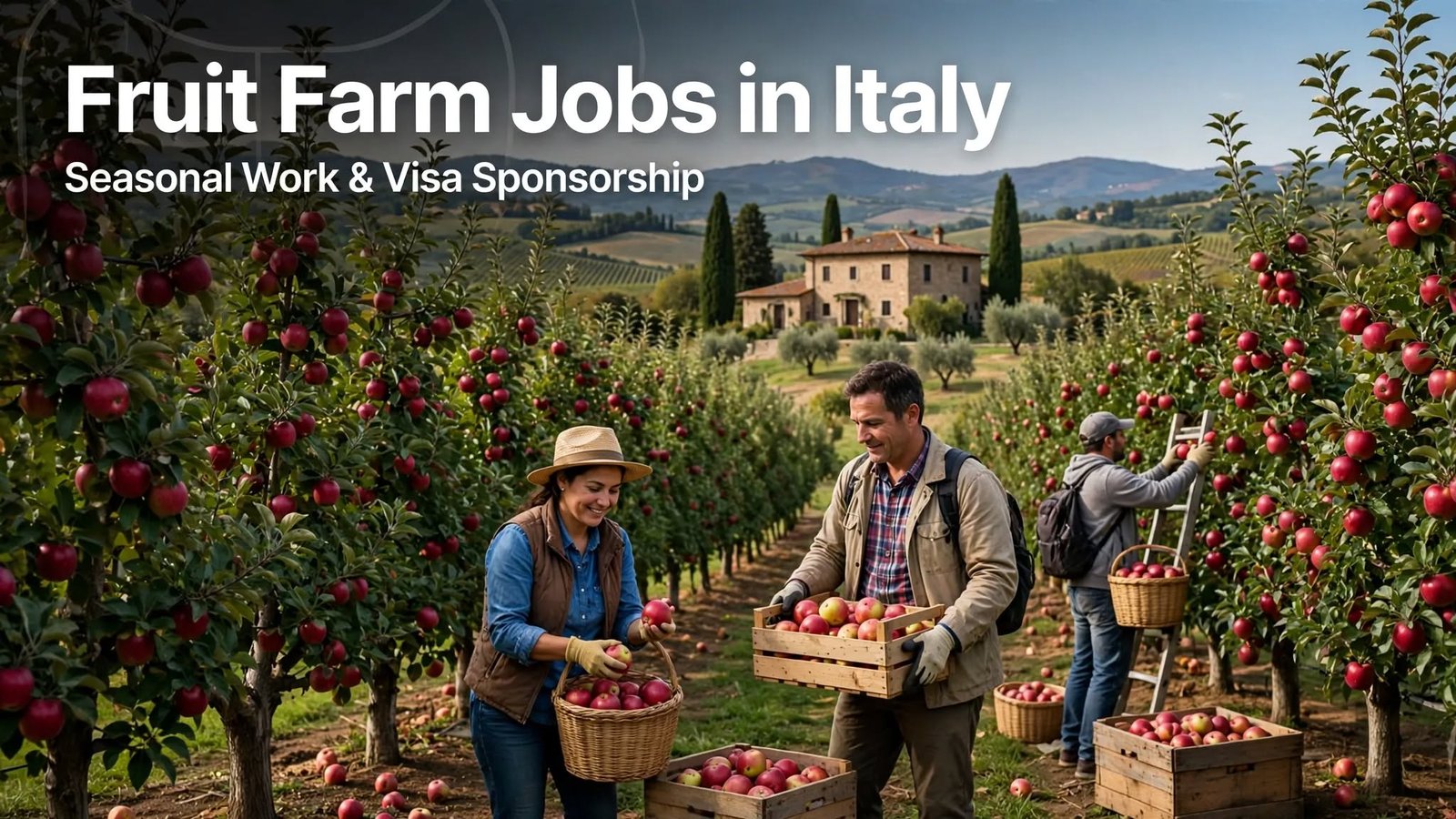
Italy is one of Europe’s biggest fruit producers. Its orchards, vineyards and citrus groves feed local markets and export to dozens of countries. Every year, apples ripen in the Alps, kiwis in Lazio, oranges in Sicily and grapes across half the country. Each harvest needs thousands of extra hands in a short window of time.
That demand is why fruit farm jobs in Italy attract workers from around the world. The work is physical and the days are long, but it is also one of the most accessible ways for non-EU citizens to enter the Italian labour market legally, earn a wage in euros and gain European work experience.
This guide covers what the work involves, where and when the jobs are, how the legal route works, what you can realistically expect to earn, and how to protect yourself from fake job offers.
Why Italy Needs Fruit Farm Workers
Italian agriculture depends on seasonal labour. Fruit, vegetables and grapes ripen on their own schedule, and a crop that is not picked in time is lost. A local workforce alone cannot cover those short, intense peaks, so farms rely on seasonal workers.
Read Also: Digital Marketing Jobs in Italy
The government acknowledges this in its immigration planning. Under the three-year entry plan for 2026–2028, seasonal work is programmed to increase, with 88,000 entries in 2026, 89,000 in 2027 and 90,000 in 2028. Seasonal work is concentrated mainly in the agricultural and tourism-hospitality sectors. In plain terms, there is a legal, planned channel for foreign fruit pickers. esteriesteri
Types of Fruit Farm Jobs in Italy
Not every role is the same. Here are the most common ones.
Fruit Picker / Harvest Worker
This is the most common entry-level role. You pick fruit by hand, place it carefully in crates or bins, and move along the rows. Handling matters, because bruised fruit loses value.
Orchard Worker
Orchard workers do more than harvest. Tasks include pruning, thinning (removing extra fruit so the rest grows larger), tying branches, planting and general tree care. These jobs can last longer than a pure harvest contract.
Packing and Sorting Staff
Many farms and cooperatives have packhouses where fruit is washed, graded, packed and labelled. The work is often indoors, which is a plus in summer heat or rain.
Vineyard and Grape Harvest Worker
The grape harvest (vendemmia) is a classic Italian seasonal job. It is hard on the back, but the atmosphere is social and the work tends to be well organised.
Machine Operator or Tractor Driver
With experience, you can move into driving tractors, platforms and harvesting equipment. These roles pay better and usually require proof of skills or a licence.
Team Leader / Supervisor
Experienced workers who speak some Italian can become crew leaders, coordinating teams and quality checks.
Where the Jobs Are: Regions and Fruits
Italy’s fruit calendar varies by region, so the location you choose shapes your whole experience.
Trentino-South Tyrol (North)
This is apple country. Valleys in the Alps produce a large share of Italy’s apples. The harvest is generally in late summer and autumn, and wages and working conditions here are often considered among the better organised.
Emilia-Romagna and Veneto (North/Northeast)
Expect peaches, nectarines, pears, cherries, kiwis and grapes. Emilia-Romagna in particular has a dense network of fruit farms and packhouses.
Piedmont (Northwest)
Hazelnuts, grapes and apples are the main crops. The wine regions here recruit heavily during the grape harvest.
Lazio and Campania (Central/South)
Kiwis, hazelnuts, apricots and berries dominate. Farms near the coast and around the plains south of Rome often employ foreign seasonal workers.
Puglia and Basilicata (South)
Table grapes, cherries, olives and citrus fruit. Summer here is very hot, so early starts are the norm.
Sicily and Calabria (South)
Oranges, lemons, mandarins and other citrus fruit. The citrus harvest usually runs in the cooler months, which makes it a useful option outside the northern summer season.
When Is the Fruit Harvest Season in Italy?
Timing matters, especially for visa planning. Rough guidance:
- Spring (April–June): Strawberries, cherries, early apricots
- Summer (June–September): Peaches, nectarines, plums, melons, table grapes
- Late summer to autumn (August–November): Apples, pears, kiwis, wine grapes, hazelnuts
- Winter (November–March): Citrus fruit in the south, plus pruning in orchards and vineyards
Exact dates change each year with weather and region. Because different crops ripen at different times, some workers move from region to region, but that depends on what your permit and contract allow.
Can Foreigners Legally Work on Italian Fruit Farms?
Yes, but only through the correct legal channels. The main route for non-EU citizens is the seasonal work permit under Italy’s Decreto Flussi (the annual or multi-year quota decree).
How the Seasonal Work Route Works
- An Italian employer applies, not you. The employer (or their trade association) submits a request for a work authorisation called the nulla osta al lavoro stagionale through the official online portal.
- Quotas apply. Only a fixed number of authorisations are available each year, and applications are processed within those limits.
- After approval, you apply for a visa. You take the authorisation to the Italian embassy or consulate in your country and apply for a seasonal work visa.
- On arrival, you complete the paperwork. This usually includes signing the contratto di soggiorno (residence contract) and applying for the permit to stay.
Key Dates to Know
Under the 2026–2028 decree, the application windows are fixed. Applications open on 12 January for seasonal agricultural work, and employers using the portal as private users can file up to three applications in each year of 2026, 2027 and 2028. The practical lesson is that the employer’s application is made early in the year, so planning must start well before the harvest. arlettipartnersarlettipartners
Priority and Multi-Year Permits
The decree also favours workers who have already come before. Separate quotas are reserved for workers who entered Italy for seasonal work at least once during the preceding five years and for whom an employer applies for a multi-year seasonal authorisation. If you do a good job in your first season, this can make returning easier. arlettipartners
Important: Rules Change
Quotas, dates, eligible nationalities and procedures are updated regularly. Always confirm current rules on the official Italian Ministry of the Interior and Ministry of Foreign Affairs websites, or through the Italian embassy in your country, before you pay anyone or make plans.
Who Is Eligible? Typical Requirements
Requirements vary by employer and country, but most fruit farm jobs ask for:
- A valid passport with enough remaining validity
- A genuine job offer or employer application under the quota system
- Good physical fitness, because you will stand, bend and carry for hours
- Willingness to work outdoors in heat, cold or rain
- Reliability and punctuality, since crews work to tight schedules
- No criminal record (checks may be required for the visa)
- Accommodation arrangements, which employers must often document as part of the process
Experience is usually not required for basic picking roles. Employers train new workers on the spot. Basic Italian or English helps you follow instructions and stay safe.
Salary and Working Conditions
Pay for farm work in Italy is not decided freely by each farm. Agricultural employment is generally governed by national and provincial collective labour agreements, which set minimum rates, working hours, overtime and rest periods. Pay can differ by region, job category and whether you are paid hourly, daily or partly by piece rate.
What you should expect:
- A written contract stating wages, duration, working hours and role
- Pay slips and legal deductions for taxes and social contributions
- Rest days and breaks as required by law
- Safety training and protective equipment where relevant
- Overtime pay for work beyond standard hours
Accommodation and Costs
Some employers provide housing, while others help you find it. If accommodation is deducted from wages, that should be written down clearly. Compare your net pay after rent, food and transport, not just the headline hourly rate. Also remember travel costs to Italy.
A Realistic Picture
Harvest days can be long, especially at peak times, and the work is repetitive. Weather affects both the work and your earnings. Treat the job as a stepping stone and a way to save some money and gain experience, not as a quick fortune. Check the exact pay rate for your region and contract before accepting any offer.
How to Find Fruit Farm Jobs in Italy
1. Go Through Legal Employer Channels
Legitimate offers come from Italian farms or agricultural associations that file the official application for you. If a “recruiter” asks you to pay for a job that does not exist in the official system, walk away.
2. Use Official and Reputable Sources
- Italian Ministry of Labour and Ministry of the Interior information pages
- Italian embassy or consulate notices in your country
- Recognised agricultural associations and cooperatives
- Official job portals, including the European EURES network (mainly relevant for EU citizens and certain programmes)
3. Prepare Your Documents Early
Have your passport, a simple CV, any previous farm experience, and proof of qualifications ready. A short CV in English, or Italian if you can manage it, is enough.
4. Learn Basic Italian Phrases
Even simple words for fruit, tools, directions and safety help you settle in faster and make a good impression with your crew leader.
5. Plan Around the Calendar
Because employer applications open early in the year, start your search in autumn and winter for the following season. Waiting until summer is usually too late.
How to Avoid Job Scams
Fake offers are a serious problem in overseas farm recruitment. Protect yourself with these rules:
- Never pay for a “guaranteed” job or visa to someone you cannot verify. Be very suspicious of anyone demanding large fees upfront.
- Verify the employer. Check that the farm exists and ask for the official application details.
- Be wary of social media offers. Ads promising easy work, high pay and instant visas are a warning sign.
- Never hand over your passport to an agent or employer to hold.
- Insist on a written contract before travelling, in a language you understand.
- Check with the embassy. If in doubt, ask the Italian embassy or consulate whether the offer matches official procedure.
- Avoid working without a permit. Illegal work leaves you with no protection, exposes you to exploitation, and can damage future visa applications.
Italy has been actively working against irregular hiring and exploitation of workers, and the official policy framework explicitly aims to fight undeclared work. Use the legal route and you stay on the right side of the system.
Tips for Succeeding as a Fruit Farm Worker
- Start early and pace yourself. Mornings are cooler and more productive. Save your energy for the whole shift.
- Dress for the weather. Layers, a hat, sun protection, sturdy shoes and waterproofs make a big difference.
- Stay hydrated and eat well. Heat and long hours drain you faster than you expect.
- Protect your body. Use proper lifting technique and take short breaks to stretch.
- Be careful with the fruit. Quality counts as much as speed.
- Keep records. Note your hours and keep copies of your contract and pay slips.
- Build relationships. Good workers get recommended and invited back, which is the easiest way to secure future seasons.
- Know your rights. If something feels wrong, such as unpaid wages or unsafe conditions, contact local unions, labour inspectorates or support organisations.
Career Growth: What Comes After Fruit Picking?
For many people, seasonal work is just the first step. With experience you can:
- Move into machine operation or orchard management
- Become a team leader or crew supervisor
- Work in packing, logistics or food processing
- Return in later seasons under multi-year authorisations
- Use your Italian and farm experience to look for other roles in the agri-food sector
Italy’s food industry is large, and workers who are reliable and willing to learn can find opportunities beyond the first season.
Pros and Cons at a Glance
Pros
- Legal pathway into the EU labour market
- No advanced qualifications required for entry-level roles
- Chance to earn in euros and gain international experience
- Employers often provide training and sometimes housing
- Possible route to returning in future seasons
Cons
- Physically demanding, repetitive work
- Seasonal and temporary by nature
- Weather-dependent conditions
- Competitive quotas and early employer deadlines
- Risk of scams if you use unofficial channels
Frequently Asked Questions (FAQ)
1. Can I get a fruit farm job in Italy without experience?
Yes. Most picking roles are open to beginners, and employers usually train workers on arrival. Physical fitness and reliability matter more than prior experience.
2. Do I need to speak Italian?
Not always, but basic Italian helps a lot with safety, instructions and daily life. Some farms have multilingual crews.
3. Who applies for the seasonal work permit, me or the employer?
The employer applies for the work authorisation through the official portal. You then apply for the visa at the Italian embassy or consulate after approval.
4. When should I start looking for a job?
Start months in advance. Employer applications for seasonal agricultural work open early in the year, so the best time to search is autumn and winter before the season you want.
5. How long can a seasonal fruit farm job last?
Seasonal contracts are short-term and tied to the harvest, and the exact duration depends on your permit and contract. Some workers may later qualify for multi-year authorisations.
6. Does the employer provide accommodation?
Some do, and some help you find housing. Make sure any housing arrangement and related deductions are written in your contract.
7. How much do fruit pickers earn in Italy?
Pay depends on the region, role, contract and collective agreement. Ask for the exact rate in writing, and compare your net income after living costs.
8. Is it safe to pay an agent for a job in Italy?
Be very careful. Genuine employers apply through the official system. Never pay large sums to someone you cannot verify, and check with the Italian embassy if in doubt.
9. Can I work in Italy on a tourist visa?
No. Working without the right permit is illegal and risky. Always use the proper work visa route.
Conclusion
Fruit farm jobs in Italy offer a genuine, legal way to work in Europe, earn in euros and gain valuable experience, especially if you are willing to do physically demanding work and plan ahead. The system is built around employers applying early in the year, quotas that are published in advance, and a visa process you must follow step by step.
The biggest risks are not the work itself but poor planning and fake offers. Start your research early, rely on official sources, insist on a written contract, and never pay for a job you cannot verify. Do that, and a single harvest season can become the first step toward a longer career in Italy’s agri-food industry.
Disclaimer: Immigration rules and quotas change frequently. This article is for general information only and is not legal advice. Always confirm current requirements with official Italian authorities or the nearest Italian embassy or consulate.
One thought on “Fruit Farm Jobs in Italy: A Complete Guide to Seasonal Harvest Work, Visas and Pay”