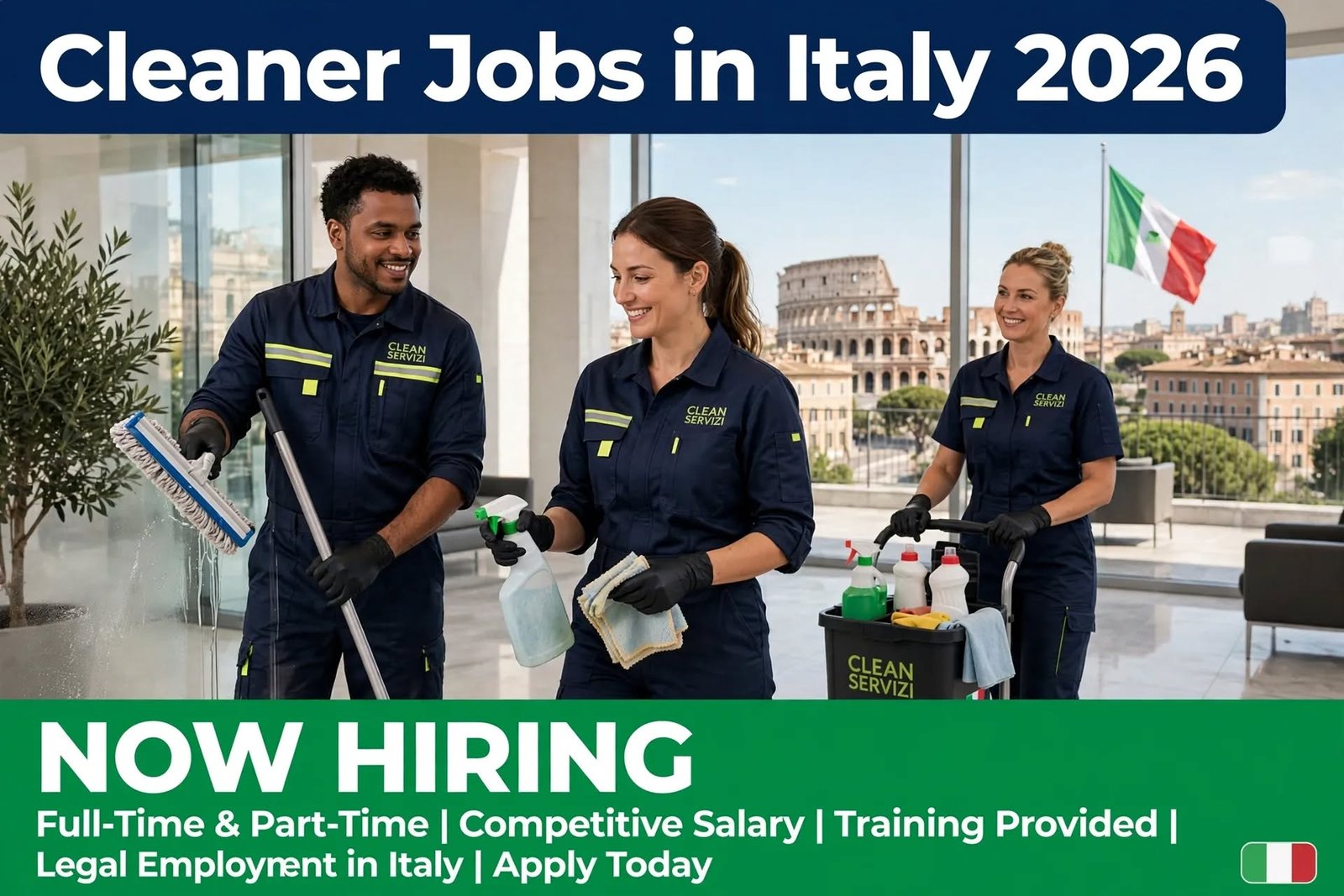
Italy draws millions of tourists every year. Behind every spotless hotel room, polished hospital corridor, and tidy office is a cleaner who makes it possible. That steady demand is why cleaner jobs in Italy remain a realistic option for people who want to work in Europe, especially those who are just starting out.
Cleaning work does not need a university degree, and many employers will train you on the job. If you are reliable and hardworking, you can build a stable income here.
This guide covers the types of cleaning jobs available, what you can expect to earn, the visa routes, the best cities, and how to apply safely. Let’s get started.
Why Cleaner Jobs in Italy Are in Demand
Italy’s economy leans heavily on tourism, healthcare, manufacturing, and services. All of these need clean, hygienic spaces every single day. Several factors keep demand strong:
- Year-round tourism: Cities like Rome, Venice, Florence, and Milan fill hotels and holiday rentals through most of the year.
- Healthcare and public hygiene: Hospitals, clinics, and care homes need trained cleaning staff.
- Outsourced cleaning services: Many offices, shopping centres, and factories hire professional cleaning companies instead of keeping their own staff.
- An ageing population: More Italian households rely on domestic helpers and home cleaners.
Put simply, the work does not disappear, and that gives job seekers a degree of security.
Types of Cleaner Jobs in Italy
“Cleaner” covers many roles. Knowing the differences helps you target the right vacancies.
1. Hotel Housekeeping Jobs
Hotels, resorts, bed and breakfasts, and holiday apartments hire housekeepers to clean rooms, change linen, and restock supplies. In Italian, this role is often called cameriera ai piani (for women) or addetto alle pulizie in hotel. Seasonal positions are common in coastal and tourist areas.
2. Office and Commercial Cleaning
Cleaning companies, known as imprese di pulizia, send staff to offices, banks, shops, and shopping centres. Shifts are often early in the morning or in the evening, outside business hours.
3. Domestic Cleaning (Home Cleaner)
Private families hire home cleaners, often called colf, for regular household cleaning. Hours can be flexible, and some people work for several families each week.
4. Hospital and Healthcare Cleaning
This role involves strict hygiene standards, including sanitisation and correct waste handling. It often pays slightly more than general cleaning because of the added responsibility.
5. Industrial and Factory Cleaning
Factories and warehouses need cleaners to keep production areas safe and tidy. The work can be physical and may involve cleaning machinery or using industrial equipment.
6. Specialised Cleaning
These roles include window cleaning, post-construction cleaning, deep cleaning, and sanitisation services. They can pay more, and some require extra training or certifications.
Cleaner Salary in Italy: What Can You Expect?
Pay depends on your role, your employer, your region, and your experience. Most professional cleaning companies follow a national collective labour agreement, known as a CCNL, which sets minimum wages, working hours, holiday entitlements, and other protections. Cleaning staff usually fall under the agreement for cleaning and multi-service companies.
As a general idea, many full-time cleaners earn somewhere in the range of €1,000 to €1,400 per month net, though this varies widely. Part-time work pays less, while specialised or supervisory roles may pay more. Domestic cleaners are often paid by the hour, and rates differ by city, with larger northern cities such as Milan usually paying more than smaller towns in the south.
Please note: These figures are approximate and change over time. Always check the exact salary, working hours, and contract type in your job offer before accepting.
Factors That Affect Your Pay
- Location: Northern cities generally have a higher cost of living and higher wages.
- Experience: Skilled cleaners and team leaders earn more.
- Type of employer: Large companies and hospitals often offer more structured pay.
- Working hours: Night shifts, weekends, and holidays may bring extra pay.
- Contract type: Permanent contracts typically offer more stability than short-term ones.
Requirements for Cleaner Jobs in Italy
The entry barrier is low compared with many other professions, but employers still look for certain qualities.
Basic Requirements
- Right to work in Italy: This means Italian or EU citizenship, or a valid work permit or visa for non-EU applicants.
- Physical fitness: Cleaning involves standing, bending, and lifting for long periods.
- Reliability and honesty: Cleaners are often trusted with access to homes, offices, and hotel rooms.
- Attention to detail: Employers value consistent, high-quality work.
Language Skills
You do not need perfect Italian to begin, but basic Italian helps enormously. Understanding instructions, reading safety labels, and talking with supervisors all become easier. Learning even simple phrases before you arrive will improve your chances. In international hotels and tourist areas, some English may also help.
Helpful but Optional
- Previous cleaning or housekeeping experience
- Knowledge of cleaning chemicals and safety procedures
- A driving licence, which can help if you travel between work sites
- Safety and hygiene training certificates
Work Visa and Legal Routes for Foreign Cleaners
This is the section that matters most for international applicants, so read it carefully.
For EU Citizens
If you hold citizenship of an EU country, you can live and work in Italy without a visa. You will still need to complete local registration steps and obtain an Italian tax code (codice fiscale).
For Non-EU Citizens
Non-EU nationals generally need legal authorisation to work in Italy. Italy manages most employment-based entry through an annual quota system called the decreto flussi. Under this system, employers in Italy apply for permission to hire foreign workers, and quota categories can include seasonal work, domestic work, and non-seasonal subordinate work. The details, dates, and number of available places change from year to year.
Here is the basic flow, kept simple:
- An Italian employer or family applies for authorisation within the quota period.
- If approved, you apply for the matching visa at the Italian embassy or consulate in your home country.
- After arrival, you complete paperwork for your permesso di soggiorno (residence permit) and your codice fiscale.
Because rules, quotas, and procedures are updated regularly, always confirm current requirements on official Italian government websites or with the Italian embassy in your country. Do not rely on anyone who promises a guaranteed visa.
Best Cities in Italy for Cleaning Jobs
Opportunities exist across the country, but some places offer more vacancies.
- Milan: A business hub with offices, hotels, and commercial buildings. Wages tend to be higher, but so is the cost of living.
- Rome: Tourism, government buildings, and hospitality create steady demand.
- Florence and Venice: Heavy tourism means many hotel and holiday-rental cleaning roles.
- Turin and Bologna: Strong industrial and service sectors with regular openings.
- Naples and Southern Italy: Seasonal tourism work, often with a lower cost of living.
- Coastal resorts (Rimini, Amalfi Coast, Sardinia, Sicily): Strong summer demand for seasonal housekeepers.
How to Find Cleaner Jobs in Italy
Online Job Portals
Search for terms like addetto alle pulizie, operatore di pulizia, cameriera ai piani, or colf on popular Italian job websites. Platforms such as Indeed Italia, InfoJobs, and Subito Lavoro regularly list cleaning vacancies. The European job mobility portal EURES is also worth checking.
Recruitment Agencies
Italy has many employment agencies (agenzie per il lavoro) that fill cleaning and hospitality roles. Registering with a reputable one can lead to temporary or permanent placements.
Direct Applications to Cleaning Companies
Many cleaning firms accept direct applications through their websites. A short, clear CV and a polite message in simple Italian go a long way.
Hotels and Hospitality Groups
Check the career pages of hotels and resort groups, especially before the summer and holiday seasons, when they hire in numbers.
Networking and Community Groups
Word of mouth is powerful. Friends, relatives, and community groups often hear about openings before they are advertised.
How to Write a CV for a Cleaning Job
Your CV does not need to be long. One page is enough. Include:
- Contact details and a professional email address
- Work experience, even if it is informal or from another country
- Key skills such as time management, teamwork, and knowledge of cleaning equipment
- Languages and your level in each
- Availability, including willingness to work shifts
Be honest, keep the layout neat, and proofread carefully. For a cleaning role, a tidy CV quietly shows that you care about quality.
Your Rights as a Cleaner in Italy
Knowing your rights protects you from exploitation. In general, legally employed workers in Italy are entitled to:
- A written employment contract
- Pay in line with the applicable collective agreement
- Paid holidays and rest periods
- Social security and pension contributions
- A safe workplace, including protective equipment where needed
If something feels wrong, such as unpaid wages or no contract, you can seek help from a trade union (sindacato) or from official labour authorities.
Avoiding Job Scams
Unfortunately, fake job offers target people who want to work abroad. Protect yourself with these warning signs and habits:
- Never pay large fees to anyone who promises a guaranteed job or visa.
- Be careful with offers that seem too good to be true, such as very high pay for no experience.
- Verify the employer through official channels and company registries.
- Insist on a written contract before you travel.
- Do not share passport copies or bank details with unverified contacts.
- Use official embassy and government resources to confirm visa procedures.
A legitimate employer will not pressure you to send money urgently.
Tips to Succeed and Grow in a Cleaning Career
Cleaning can be a starting point rather than a final destination. Here is how to move forward:
- Learn Italian steadily. Even 20 minutes a day makes a real difference.
- Be punctual and dependable. Reliability is the most valued quality in this field.
- Take safety and hygiene courses. Certifications can lead to better-paid roles.
- Aim for supervisory roles. Team leaders and site coordinators earn more.
- Consider specialisation. Sanitisation, industrial, and healthcare cleaning offer growth.
- Save and plan. Understand your contract, taxes, and living costs from the start.
Pros and Cons of Cleaner Jobs in Italy
Advantages
- Low entry barrier and no degree required
- Steady demand across the country
- Opportunities for full-time, part-time, and seasonal work
- A route to gaining European work experience
- Potential to move into supervisory or specialised roles
Challenges
- The work is physically demanding
- Early morning, evening, or weekend shifts are common
- Starting salaries can be modest
- Language barriers can be difficult at first
- Visa and quota processes for non-EU applicants can be competitive
Weigh both sides honestly before deciding.
Frequently Asked Questions (FAQ)
Can foreigners get cleaner jobs in Italy?
Yes, but you need legal authorisation to work. EU citizens can work freely, while non-EU citizens usually need a visa linked to Italy’s quota system or another valid permit.
Do I need to speak Italian to work as a cleaner?
Not always at the start, but basic Italian is strongly recommended. It helps you follow instructions, stay safe, and keep your job.
How much does a cleaner earn in Italy?
Earnings vary by role, city, and contract. Many full-time cleaners earn roughly between €1,000 and €1,400 net per month, but you should confirm exact figures in your contract.
Is experience required?
Usually not. Many employers provide training, though experience in housekeeping or professional cleaning can help you stand out.
Are cleaning jobs available all year?
Office, hospital, and domestic cleaning offer year-round work. Hotel and resort roles are often seasonal, peaking in spring and summer.
Can I find a cleaning job before arriving in Italy?
It is possible, especially through the official quota system or reputable agencies, but be cautious and verify every offer.
What is the best way to avoid scams?
Never pay for a promised job, always get a written contract, and check visa information with official government or embassy sources.
Conclusion
Cleaner jobs in Italy offer a practical way to enter the European job market, particularly for people without advanced qualifications. Demand is steady, the work is available in every region, and with the right attitude you can move from entry-level roles into supervision or specialised services.
Success comes down to preparation. Learn some Italian, understand the visa process, build a clean and honest CV, and always check the legitimacy of an employer. The work can be demanding, but for many people it is a stable first step toward a better future abroad.
If you are serious about working in Italy, start small, stay informed, and use only official sources for legal and visa information. Your effort and reliability will be noticed.