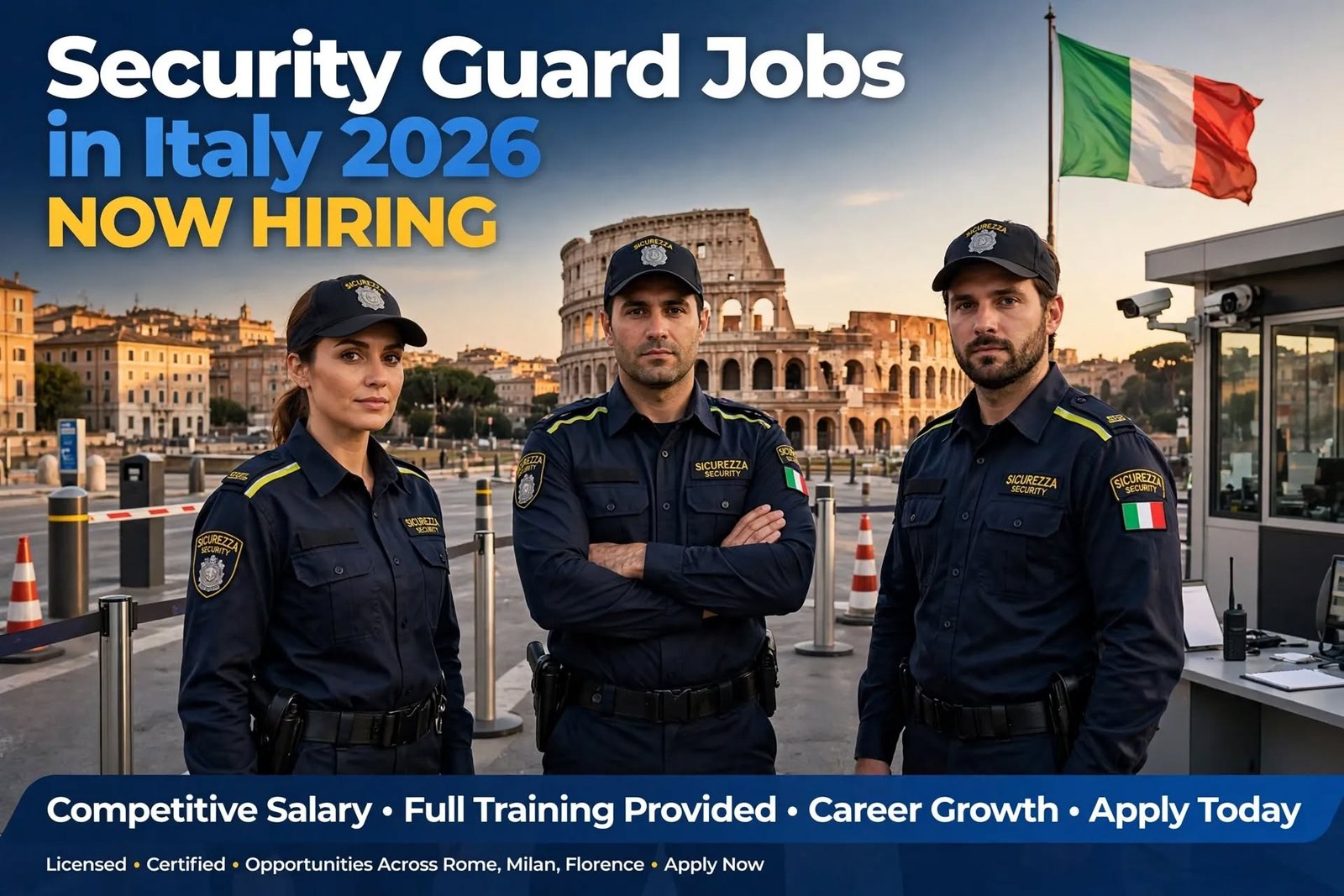
Italy has more than 20,000 museums, shopping centres, factories, hospitals, ports and train stations. They all need someone to watch the doors, check the cameras and keep people safe. That steady demand makes security guard jobs in Italy a practical career choice, whether you live in the country or are planning a move.
The sector isn’t as simple as “apply and start Monday,” though. Italy regulates private security tightly. Some roles need a prefecture license, some are limited to Italian and EU citizens, and others are open to almost anyone with the right training and Italian language skills.
This guide covers the types of jobs, who can apply, what you can earn, where the work is, and how to build a realistic plan for getting hired.
Why Security Guard Jobs in Italy Are in Demand
Several trends keep the sector busy:
- Tourism. Rome, Venice, Florence and Milan welcome millions of visitors, and every hotel, museum and attraction needs staff for access control.
- Retail and logistics. Warehouses, distribution hubs and big shopping malls need constant surveillance.
- Events. Concerts, football matches and fairs need stewards and crowd-control teams.
- Public and private infrastructure. Hospitals, stations, offices and industrial plants all hire security personnel.
- Outsourcing. Many organisations hire specialist companies rather than employing guards directly, which keeps those companies recruiting.
In short, security work is stable and not tied to one season.
Types of Security Guard Jobs in Italy
Italian law distinguishes between several roles. Knowing the difference saves you time, because the requirements vary a lot.
1. Guardia Particolare Giurata (GPG)
The Guardia Particolare Giurata is a sworn private security guard. This is the most regulated role and usually the best paid. Duties include:
- Guarding private property and valuables
- Alarm response and mobile patrols
- Cash-in-transit escort
- Armed or unarmed protection, depending on the contract
A GPG must hold a personal license issued by the Prefecture (the local representative of the Italian state).
2. Addetto ai Servizi Fiduciari (Non-Licensed Security)
These workers handle non-sworn security services, often called “fiduciary services.” They don’t carry weapons or hold police-like powers. Typical tasks:
- Reception and front-desk control
- Monitoring visitors and checking badges
- Night watch in offices and buildings
- Basic patrols and incident reporting
This is the most accessible entry point for newcomers.
3. Steward and Event Security
Stewards manage queues, seating and crowd flow at stadiums, concerts and festivals. Italian rules require registration and specific training for those who work in venues. The work is often part-time or seasonal.
4. Doorman / Bouncer (Addetto al Controllo)
Nightclubs, bars and entertainment venues hire staff for entrance control. A registry with the prefecture applies, and a training course is mandatory.
5. Control Room and CCTV Operator
Some guards work indoors, monitoring cameras and alarm systems and coordinating with patrols. These roles often reward good IT skills and calm judgment.
6. Airport, Port and Transport Security
Airports, ports and railway stations employ screening and access-control personnel. These jobs typically require extra certification and security clearance, and the hiring process is stricter.
Who Can Work as a Security Guard in Italy?
This is the most important section if you’re a foreign applicant, so read it carefully.
Basic Requirements
Most employers look for:
- Age: at least 18 (often 21 for GPG roles)
- Clean criminal record: a certificate with no serious convictions
- Physical and mental fitness: a medical certificate
- Reasonable Italian: you’ll write reports and deal with the public and emergency services
- Completed training: mandatory for regulated roles
Citizenship and Work Permit Rules
- GPG license: Italian law generally restricts this to Italian citizens and citizens of other EU member states. Non-EU nationals normally can’t hold it.
- Non-licensed fiduciary and reception roles: these are more flexible, but you still need the legal right to work in Italy (EU citizenship, a valid residence permit with work authorisation, or a visa).
- Long-term residents: if you have a permit allowing employment, you can often apply for non-sworn roles.
Rules change and vary by region, so always confirm current requirements with the local Prefecture or the Questura, or with an authorised employment agency, before spending money on a course.
Training and Licenses: What You Need to Know
Training Courses
For regulated positions, you must complete an approved training programme. These usually cover:
- Italian security law and the limits of your powers
- Conflict management and de-escalation
- First aid and basic fire safety
- Report writing and communication
- Use of security equipment and surveillance systems
For armed GPG roles, you must also pass weapons handling and shooting tests and hold the relevant authorisations.
Fire Safety and First Aid
Many employers value (or require) certificates in fire prevention and first aid (antincendio and primo soccorso). These short courses are cheap and make your CV stand out.
Where to Train
Look for training providers approved by regional authorities or recognised security associations. Be careful with any school that guarantees a job or a visa. No legitimate course can promise that.
Security Guard Salary in Italy
Pay depends on your role, your contract level, your city and how many hours or night shifts you work. Most private security workers fall under the national collective agreement known as the CCNL Vigilanza Privata e Servizi Fiduciari, which sets minimum wages, overtime, holiday pay and notice periods.
As a general guide:
- Entry-level fiduciary and reception roles: modest monthly pay, often at the lower end of Italian salaries
- GPG roles: usually higher, with supplements for night work, holidays and hazardous duty
- Supervisors and team leaders: noticeably more, with extra responsibility
Rather than rely on one headline figure, check the current wage tables in the CCNL and read your contract carefully. Overtime, night shifts and Sunday work can add a meaningful amount to your take-home pay. Italian contracts also include the TFR (severance accrual), thirteenth-month pay and paid leave, which add to the true value of the job.
Tip: if an offer seems far below the collective agreement minimum, treat it as a red flag.
Best Cities for Security Guard Jobs in Italy
Milan
The business capital has the largest number of offices, malls, hotels and events. Demand is high and so is the cost of living.
Rome
Government buildings, embassies, museums, hospitals and tourism create steady vacancies, especially in access control and event security.
Turin and the North
Industrial areas and logistics hubs offer regular work, often with a lower cost of living than Milan.
Bologna and Emilia-Romagna
Trade fairs, logistics and universities keep security teams busy.
Naples and the South
Ports, shopping centres and tourism generate jobs, though pay and conditions can vary more, so read contracts closely.
Top Employers and Where to Find Vacancies
Types of Employers
- Licensed security institutes (istituti di vigilanza), such as large national providers
- Facility-management and cleaning companies that also supply guards
- Event companies and stadium operators
- Hotels, shopping centres and retail chains, either directly or through contractors
- Hospitals and logistics firms
Where to Search
- Employment agencies (agenzie per il lavoro) that handle security staffing
- Job portals and company career pages
- The public employment centres (Centri per l’Impiego)
- Local notice boards and networks, particularly for event work
Tailor your search in Italian too. Terms like “addetto alla sicurezza”, “guardia giurata”, “portierato” and “servizi fiduciari” will surface far more listings than English keywords.
How to Apply: A Step-by-Step Guide
- Check your eligibility. Confirm your citizenship, work permit and age against the role you want.
- Choose your target role. Beginners usually start with fiduciary, reception or steward work.
- Improve your Italian. Aim for a level where you can write a short incident report and handle a tense conversation.
- Complete the required training. Pick an approved provider and add first aid and fire safety.
- Get your documents ready. This typically means ID, a criminal record certificate, a medical certificate and training diplomas.
- Write an Italian-style CV. Keep it clear, add a professional photo if you wish, and highlight reliability, languages and any military, police or customer-service experience.
- Apply widely. Contact agencies and security companies directly, and follow up politely.
- Prepare for the interview. Expect questions about handling conflict, working nights and following procedures.
- Read your contract. Confirm the CCNL level, hours, shift pattern and overtime rules before signing.
Skills That Make You Stand Out
Employers value people who are more than “someone standing at a door.” Build these:
- Calm under pressure and strong de-escalation skills
- Observation and attention to detail
- Clear written and spoken communication
- Languages. English, Arabic, Chinese or French can be a real advantage in tourist and international settings.
- Basic IT skills for CCTV, access-control software and reporting apps
- Physical fitness and punctuality
- Integrity. In this industry, trust is the product.
Day in the Life of a Security Guard in Italy
A typical shift might include:
- A handover briefing with the previous team
- Checking IDs and badges at the entrance
- Patrolling the premises at set intervals
- Monitoring cameras and responding to alarms
- Logging incidents accurately in the daily register
- Assisting visitors and coordinating with emergency services when needed
Shifts often run in 8- or 12-hour blocks, including nights, weekends and public holidays. The work can be quiet, but it requires constant alertness.
Pros and Cons of Security Work in Italy
Advantages
- Steady demand across the country
- Low barrier to entry for non-licensed roles
- Clear career ladder, from guard to supervisor to operations manager
- Collective agreement protections
Challenges
- Irregular shifts, nights and holidays
- Wages at entry level can be modest
- Strict legal rules around licenses and citizenship
- Occasional confrontations with the public
Going in with open eyes helps you stay in the job and grow in it.
Avoiding Scams and Fake Job Offers
Unfortunately, overseas applicants are common targets for fraud. Watch for these warning signs:
- Anyone asking for money upfront for a job placement or “guaranteed visa”
- Offers with no company address, contract or tax number
- Pressure to pay quickly or move conversations to private messaging apps
- Promised salaries far above the market rate
Verify every employer through official channels, and never send original documents or payments to unknown parties.
Career Growth Opportunities
Once you have experience, you can move into:
- Team leader or shift supervisor
- Control room manager
- Security consultant or risk assessor
- Corporate security officer
- Trainer at security schools
Each step usually comes with better pay and more regular hours. Extra certifications in risk management, cybersecurity awareness or event safety speed things up.
Frequently Asked Questions (FAQ)
Can a foreigner work as a security guard in Italy?
Yes, in many non-sworn roles, provided you have the legal right to work in Italy and enough Italian. The sworn GPG role is generally limited to Italian and EU citizens.
Do I need to speak Italian?
In practice, yes. You’ll write reports, follow instructions and talk to the public and the authorities. English or other languages are a bonus, not a replacement.
Is a license required for all security jobs?
No. Sworn guards need a prefecture license, while many fiduciary, reception and basic access-control jobs don’t. Stewards and bouncers need specific registration and training.
How much do security guards earn in Italy?
Pay follows the national collective agreement, and it varies by level, city, shift pattern and overtime. Check the latest CCNL tables and your own contract for exact figures.
What is the easiest way to start?
Begin with a non-licensed fiduciary, reception or steward role, complete first aid and fire safety courses, and improve your Italian while you gain experience.
Are night shifts common?
Yes. Many contracts include nights, weekends and holidays, usually with extra pay supplements under the collective agreement.
Can I advance in this career?
Absolutely. Many guards become supervisors, control room managers or trainers after a few years.
Conclusion
Security guard jobs in Italy offer something many careers don’t: steady demand, a clear entry path and room to grow. The rules are strict, especially around licenses and citizenship, but that structure also protects honest, well-prepared workers.
Start by confirming your eligibility, work on your Italian, complete the right training and apply through trusted channels. Stay alert to scams, read every contract and treat reliability as your biggest asset. With patience and preparation, a security career in Italy can become a solid long-term profession.